Shades & Window Treatments

Are Lightweight Bedroom Curtains Better Than Blackout Curtains
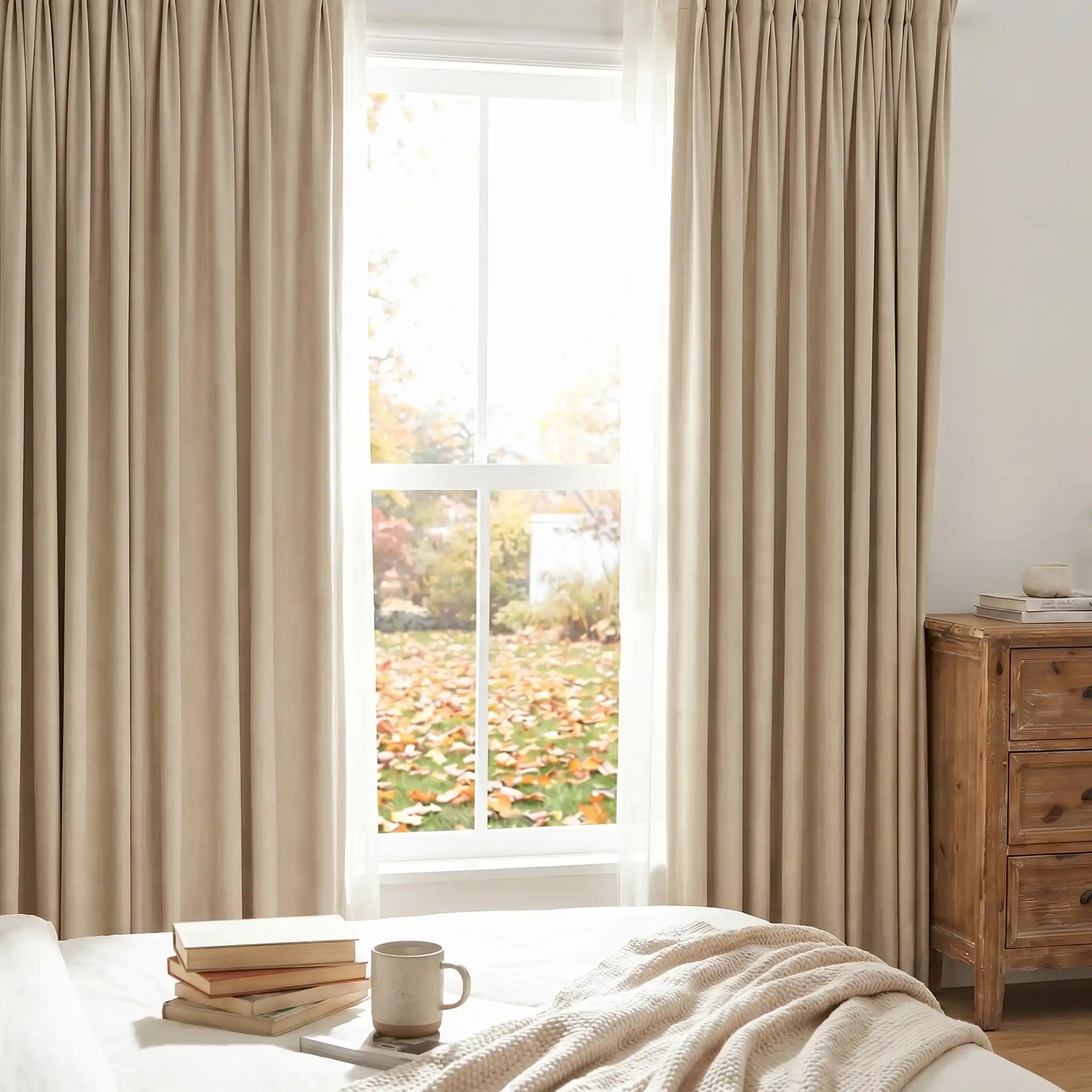
Lightweight bedroom curtains and blackout curtains are designed for different needs, so the right option depends on your sleep habits, privacy requirements, and the mood you want to create in the bedroom. Lightweight curtains help the room feel bright, open, and breathable, while blackout curtains are made to provide darkness, stronger privacy, and better insulation. For today’s homeowners, this choice matters because bedrooms often serve more than one purpose. A bedroom may also be used as a home office, nursery, reading area, or quiet place to unwind. Because of that, the best curtain is not simply the heaviest or most decorative option. It is the one that fits naturally into your daily life. A common misunderstanding is that one type of curtain is always superior to the other. In practice, lightweight curtains, blackout curtains, and layered curtain setups can all be useful. The smartest choice comes from understanding your lifestyle, room conditions, and how you use the space each day. Lightweight Curtains vs. Blackout Curtains: What's the Difference? Lightweight curtains and blackout curtains are used for different reasons. Lightweight curtains keep the bedroom brighter and softer. Blackout curtains help reduce light, add privacy, and make the room feel more enclosed. Fabric Construction Lightweight curtains are usually made with thin materials, including voile, linen blends, cotton blends, or polyester sheers. They are soft, light, and easy to move. Blackout curtains are made with thicker fabric or a blackout backing. They feel heavier and hang with more structure. Light Control Performance Lightweight curtains allow daylight to come through while softening glare. They are useful when you want natural light in the room. Blackout curtains are designed to block most outside light. They work better for sleeping, resting, or reducing screen glare. Privacy Levels Lightweight curtains give some privacy in the daytime, but they may be see-through at night when indoor lights are on. Blackout curtains give stronger privacy because they are thicker and less transparent. Thermal Insulation Lightweight curtains provide limited insulation. They can reduce some direct sunlight but do not block heat or cold very well. Blackout curtains usually offer better insulation due to their thicker fabric and lining. Overall Appearance Lightweight curtains make a room look brighter, softer, and more open. Blackout curtains make a room feel fuller, darker, and more private. Quick Comparison Table Feature Lightweight Curtains Blackout Curtains Light filtering Lets in softened daylight Blocks most outside light Privacy Some privacy in daytime Strong privacy Airflow Better More limited Heat insulation Limited Better Decorative style Soft and open Full and private In short, lightweight curtains are better for natural light and an open look. Blackout curtains are better for darkness, privacy, and insulation. How Climate Affects the Better Choice Curtains should match the weather where you live. Hot, cold, humid, and sunny rooms all have different needs. Hot or Tropical Areas In warm places, light curtains usually work better. They let the room feel more open and do not block airflow as much. Choose: Sheer curtains Linen blends Cotton blends Light colors Breathable fabrics If the sun is very strong, use them with blinds or solar shades. Cold Winter Areas In cold places, thicker curtains are more useful. Blackout or thermal curtains can help keep warmth inside and reduce cold air near the window. Choose: Blackout curtains Thermal-backed curtains Layered curtains Floor-length curtains Dense fabrics Homes With Hot and Cold Seasons If your area has both hot summers and cold winters, layered curtains are easier to use. The light layer works well in warm weather. The thicker layer helps when it gets cold. Best choice: Layered curtains Sheers with blackout curtains Adjustable rods or tracks Use in different seasons Humid Coastal Areas In coastal areas, moisture is something to think about. Thick curtains can hold dampness if the room has poor airflow. Lighter curtains are usually easier to dry and clean. Choose: Quick-drying fabrics Polyester blends Linen blends Washable sheers Regular mildew care Blackout curtains can still be used, but the room needs airflow and cleaning. Sunny South-Facing Bedrooms South-facing bedrooms often get a lot of sun. Blackout curtains help block heat and light. Sheer curtains are useful during the day because they reduce glare but still let in light. Best choice: Sheers for daytime Blackout curtains for sleep and heat control UV-resistant fabrics Fade-resistant materials For very sunny rooms, layered curtains are often the most practical choice. Which Curtains Save More Energy? Curtains can affect indoor temperature, HVAC use, and long-term comfort. The energy-saving advantage depends on season, climate, and how the curtains are used. Summer Cooling Performance In summer, blackout curtains can block strong sunlight and reduce heat gain, especially on west- or south-facing windows. This may help reduce cooling demand. Lightweight curtains can reduce glare but usually block less heat unless paired with solar shades or reflective liners. Winter Heat Retention In winter, blackout or thermal curtains are usually better at reducing heat loss near windows. Their denser construction creates more insulation than lightweight curtains. Lightweight curtains provide only mild insulation unless layered with other treatments. HVAC Efficiency Curtains work best when used strategically: Close blackout curtains during hot afternoons. Open curtains for winter sunlight when useful. Close thermal curtains at night in cold weather. Use lightweight curtains to reduce glare without turning on extra lights. Layer curtains for flexible temperature control. Long-Term Energy Costs Blackout curtains may offer better energy savings in extreme climates. Lightweight curtains may support energy efficiency indirectly by allowing natural daylight and reducing the need for artificial lighting. Condition Better Energy Choice Why Hot afternoon sun Blackout curtains Blocks heat gain more effectively Cold winter nights Blackout or thermal curtains Helps retain indoor warmth Mild climate Lightweight curtains Supports daylight and airflow Four-season climate Layered curtains Adapts to changing temperatures Humid climate Lightweight curtains Better airflow and faster drying For energy savings, blackout curtains usually perform better, but layered curtains provide the most balanced year-round value. Which Option Requires Less Maintenance? Curtains in the bedroom are used every day, so cleaning and upkeep matter. Over time, they can collect dust, pollen, pet hair, and smells from the room. Dust Buildup Lightweight curtains are easier to clean. You can shake them out, vacuum them, or take them down for washing without much trouble. Blackout curtains also collect dust, but they are heavier. Because of that, they can be harder to remove, clean, and hang back up. How Often They Need Washing Lightweight curtains may need washing more often, especially if you open the windows a lot. The good thing is that many lightweight fabrics can go in the washing machine. Blackout curtains may not need washing as often. But some types need spot cleaning or dry cleaning, depending on the lining. Wrinkles Polyester lightweight curtains and fabric blends usually do not wrinkle too easily. Linen sheers may wrinkle more, but some people like that softer, casual look. Blackout curtains can hold creases more because the fabric is thicker. This can happen after washing or after being folded in packaging. Fabric Durability Blackout curtains are often strong because they are made with thicker fabric. Still, the lining can wear down over time, especially if it gets a lot of direct sun. Lightweight curtains can also last well if the fabric is good quality. Delicate sheer curtains, however, may snag more easily. Long-Term Look Lightweight curtains often keep a fresh and open look. Cheaper sheers may stretch, turn yellow, or lose their shape over time. Blackout curtains usually hold their shape better. But fading, damaged lining, and dust buildup can make them look older. For simple everyday care, washable lightweight curtains are usually easier. For long-term strength and structure, good-quality blackout curtains may hold up better. Which Curtains Create a Better Bedroom Design? The better design choice depends on the mood you want to create. Curtains shape how a bedroom feels as much as how it functions. Minimalist Bedrooms Lightweight curtains work especially well in minimalist bedrooms because they keep the room clean and uncluttered. Recommended: White sheers Smooth semi-sheer panels Ceiling-mounted tracks Neutral tones Simple pleats Scandinavian Interiors Scandinavian bedrooms favor natural light, soft textures, and calm colors. Lightweight curtains are usually the better fit. Recommended: Linen blends Cotton sheers Warm white curtains Oatmeal or pale gray tones Soft, relaxed drape Luxury Bedrooms Luxury bedrooms often benefit from layered window treatments. Lightweight sheers add softness, while blackout drapes add depth and privacy. Recommended: Sheer inner curtains Blackout outer panels Full-length installation Rich but restrained colors Smooth tracks or double rods Modern Apartments Modern apartments often need privacy without losing daylight. Lightweight curtains paired with blinds or blackout panels provide the best balance. Recommended: Semi-sheer curtains Ripple-fold panels Neutral colors Layered systems Easy-care fabrics Farmhouse Style Farmhouse bedrooms look best with relaxed texture and natural materials. Lightweight cotton or linen-blend curtains work well. Recommended: Linen-look fabric Cotton blends Natural beige tones Soft white curtains Simple rods Hotel-Inspired Bedrooms Hotel-style bedrooms prioritize darkness, comfort, and a polished appearance. Blackout curtains or layered systems usually work best. Recommended: Blackout drapes Sheer underlayer Floor-to-ceiling panels Neutral or deep tones Full window coverage Design-wise, lightweight curtains create openness, blackout curtains create coziness, and layered curtains create the most complete look. Are Layered Curtains Better Than Choosing Just One? For many bedrooms, layered curtains are the more useful choice. You do not have to choose between light and darkness. With two layers, you can control the room more easily at different times of the day. Sheer Curtains Plus Blackout Curtains A simple layered setup is sheer curtains near the window and blackout curtains on the outside. This gives you more control: Use sheer curtains in the daytime Keep some natural light in the room Add privacy without making the room too dark Close blackout curtains at night Help reduce heat, cold, and outside light Double Curtain Tracks Double tracks make this setup easier to use. Each curtain layer moves separately, so you can open or close one layer without moving the other. They are a good choice for: Main bedrooms Children’s rooms Apartments Large windows Sliding doors Better for Day and Night Your bedroom does not need the same amount of light all day. In the daytime, sheer curtains can stay closed to soften sunlight and give some privacy. At night, blackout curtains can be closed to make the room darker and more private. This makes the room easier to use from morning to night. Works in Different Seasons Layered curtains are also useful when the weather changes. Light curtains work well in warm months or mild weather. Blackout or thermal curtains can help more when it is cold or when the sun is too strong. This is why layered curtains are often a practical choice. They give you light, privacy, darkness, and extra comfort in one setup. Cost Comparison: Which Offers Better Value? The value of curtains is not just about how much they cost when you buy them. You also need to think about installation, how long they last, how easy they are to clean, and whether they are useful every day. Initial Purchase Cost Lightweight curtains usually cost less. They use less fabric and are made in a simpler way. Blackout curtains usually cost more because the fabric is thicker. Some also have extra lining or coating. Installation Cost Lightweight curtains are easier to install. A simple curtain rod is often enough. Some can also be used with no-drill hardware. Blackout curtains may need a stronger rod because they are heavier. They also need to cover the window better, or light may still come in from the sides. Layered curtains usually cost more to install because they need double rods or tracks. Lifespan Good blackout curtains can last a long time, but the lining may wear out after years of use. Good lightweight curtains can also last well if the fabric is strong and you clean them the right way. Cleaning Cost Lightweight curtains are often easier to clean, especially if they are machine washable. Some blackout curtains need more care. This is common with foam backing, thermal lining, or special finishes. Long-Term Value Blackout curtains can be worth the extra cost if they help you sleep better or keep the room cooler or warmer. Lightweight curtains can be better value if you mainly want natural light, a softer look, and easy cleaning. Layered curtains often give the most use because you can adjust them for different needs. Cost Comparison Cost Factor Lightweight Curtains Blackout Curtains Layered Curtains Initial cost Lower Medium to high Highest Installation Simple Moderate More work Maintenance Easy Moderate Moderate Energy savings Low to moderate Moderate to high High Design flexibility Moderate Moderate High Overall value Best for simple needs Best for sleep and privacy Best for flexibility The best choice depends on what you care about most: saving money, sleeping better, getting more privacy, or using the curtains all year round. Expert Recommendations for Different Bedroom Types Different bedroom types call for different curtain choices. Here is a quick reference guide. Bedroom Type Recommended Curtain Why Small bedroom Lightweight curtains Keeps the room bright and open Nursery Layered curtains Supports naps, privacy, and daylight Master bedroom Blackout or layered Improves sleep and comfort Guest room Lightweight curtains Welcoming and easy to maintain Rental apartment Lightweight curtains Easy to install and remove Luxury bedroom Layered window treatments Adds softness, privacy, and depth This table shows why there is no universal winner. The bedroom’s function should guide the decision. Lightweight curtains and blackout curtains are not competing for one single “best” title. They simply solve different bedroom problems. One brings in softness and daylight, while the other focuses on darkness, privacy, and insulation. Lightweight curtains are a better fit when you want the bedroom to feel bright, open, and easy to maintain. They work especially well in small rooms, guest bedrooms, warmer climates, and interiors with a clean or minimalist style. If you enjoy waking up with natural light and prefer a softer window treatment, lightweight curtains are usually the more comfortable choice. Blackout curtains make more sense when sleep control is the main priority. They are useful for night-shift workers, children’s rooms, cold climates, street-facing windows, or bedrooms exposed to strong outdoor lighting. They also offer better privacy and can help the room feel more insulated. For many homes, the most flexible solution is to use both. A sheer or lightweight layer can keep the room pleasant during the day, while a blackout layer can be closed at night or whenever stronger coverage is needed. DWCN Store offers curtain options that support this layered approach, making it easier to balance natural light, privacy, comfort, and style in one bedroom setup.
Learn more
Modern Office Layouts Using Room Privacy Curtains for Flexible Workspaces
Modern workplaces have changed a lot over the last decade. Traditional offices with fixed walls and assigned desks are giving way to flexible environments that support collaboration, focused work, and hybrid schedules. Businesses are looking for practical ways to make better use of their office space without committing to expensive renovations. One solution that has become increasingly popular is the use of room privacy curtains . Unlike permanent walls or glass partitions, privacy curtains allow companies to divide spaces whenever needed and open them up again just as easily. They provide flexibility, improve privacy, and help offices adapt to changing needs. Whether you're redesigning a corporate office, creating collaborative zones, or upgrading a coworking space, room privacy curtains offer a simple and cost-effective way to create a more functional workspace. Why Modern Offices Need Flexible Layouts Today's offices are expected to support many different ways of working. Employees may spend part of the day collaborating with colleagues, another part attending online meetings, and the rest focusing on individual tasks. A single office layout rarely fits every activity. The Shift Toward Flexible Workspaces Hybrid work has changed how companies use office space. Since many employees split their time between home and the office, businesses are reconsidering how much permanent workspace they actually need. Instead of dedicating rooms to one purpose, many organizations now prefer multi-functional spaces that can quickly adapt. A meeting room in the morning might become a training area in the afternoon and an event space later in the day. Flexible office layouts make this possible without requiring major construction projects. Common Challenges in Open Offices Open-plan offices encourage communication, but they also create several challenges. Some of the most common issues include: Constant background noise Limited privacy for phone or video calls Difficulty concentrating on detailed work Lack of private meeting areas Reduced comfort during confidential conversations These problems can affect both productivity and employee satisfaction if they are not addressed. Why Adaptability Matters Businesses grow, teams change, and office requirements evolve over time. A layout that works today may no longer be suitable next year. Flexible design allows companies to: Rearrange workstations as teams expand Create temporary project rooms Host workshops or presentations Separate quiet work areas from collaborative spaces Make better use of available square footage Instead of investing in permanent walls, many organizations choose movable solutions that can evolve with their workspace. What Are Room Privacy Curtains? Room privacy curtains are movable fabric or vinyl partitions installed on ceiling-mounted or wall-mounted track systems. They can be opened or closed whenever needed, allowing users to divide a large room into smaller, more private spaces. Unlike fixed walls, they don't permanently change the office layout. This makes them especially useful for businesses that frequently reorganize their workspace. Privacy curtains are commonly used in: Corporate offices Coworking spaces Conference centers Educational facilities Healthcare offices Training rooms Different Types of Office Privacy Curtains Not every office has the same requirements, so privacy curtains are available in several styles. Ceiling-Mounted Curtain Systems These are installed on overhead tracks and provide a clean, modern appearance. Since the tracks remain discreet, they work well in contemporary office interiors. Acoustic Privacy Curtains Made with sound-absorbing materials, acoustic curtains help reduce noise between work areas. While they don't completely block sound like solid walls, they can noticeably improve speech privacy and reduce distractions. Fire-Retardant Curtains Commercial buildings often require materials that meet local fire safety regulations. Fire-retardant fabrics offer an added layer of protection while complying with workplace safety standards. Transparent PVC Curtains Some offices need physical separation without blocking visibility. Transparent PVC curtains create defined spaces while allowing natural light to pass through. Decorative Fabric Curtains Available in a wide range of colors, textures, and patterns, fabric privacy curtains can complement existing office décor while creating a softer and more welcoming environment. Benefits of Using Room Privacy Curtains in Offices Privacy curtains are popular because they solve several workplace challenges without requiring expensive remodeling. Flexible Space Configuration One of their biggest advantages is flexibility. Instead of committing to fixed rooms, businesses can create temporary spaces whenever necessary. For example, a large conference room can easily become two smaller meeting areas by simply closing the curtain. When a larger event is scheduled, the curtain can be opened again within seconds. This level of flexibility helps organizations maximize every square foot of available space. Better Privacy for Employees Privacy isn't only about confidential meetings. Employees often need quiet areas for focused work, virtual meetings, or phone calls. Privacy curtains create visual separation that helps people feel less exposed in open environments. When acoustic fabrics are used, they can also reduce noise transfer, making conversations more comfortable without isolating employees completely. Lower Costs Compared to Permanent Partitions Building permanent walls requires construction work, permits, electrical adjustments, painting, and significant labor costs. Privacy curtain systems are generally much easier to install and can often be completed with minimal disruption to daily business operations. If the office layout changes later, the curtains can simply be relocated instead of demolished and rebuilt. Improved Office Appearance Modern privacy curtains are available in many styles, allowing businesses to match their branding and interior design. Neutral colors create a clean, professional look, while customized fabrics can reinforce company identity. Rather than making the office feel smaller, well-designed curtains often create a warmer and more organized atmosphere. More Efficient Use of Space Large open areas sometimes remain underused because they lack structure. Privacy curtains make it possible to divide these spaces into practical work zones, such as: Small meeting rooms Focus areas Training spaces Collaboration corners Quiet workstations This allows offices to accommodate more activities without expanding their footprint. Best Office Areas for Room Privacy Curtains Privacy curtains are versatile enough to work in almost any commercial environment. Some of the most common applications include: Open Workstations Separate departments without building permanent walls while maintaining flexibility for future changes. Meeting Rooms Create temporary meeting rooms whenever additional space is needed. Phone Booths Design quiet areas for virtual meetings and confidential calls. Training Rooms Divide large classrooms into smaller workshop spaces for different groups. Breakout Areas Provide employees with quieter places to relax or hold informal discussions. Reception Spaces Create waiting areas that feel more private and organized. Coworking Offices Allow multiple businesses to share one space while maintaining a comfortable level of privacy. Popular Office Layout Ideas Using Privacy Curtains Office layouts continue to evolve as businesses look for ways to support different work styles. Privacy curtains make it easier to create flexible environments without making permanent changes to the office. Here are a few practical layout ideas. Open Office with Flexible Collaboration Zones Many companies prefer open offices because they encourage communication. However, open spaces can also become noisy and distracting. Installing privacy curtains between work zones allows teams to collaborate without affecting the entire office. When larger projects require more space, the curtains can simply be pulled back. This approach keeps the office open while giving employees more control over their surroundings. Hybrid Workspace Layout Hybrid offices often need to accommodate employees who come in on different days. Instead of assigning every worker a permanent desk, companies can create flexible zones for meetings, focused work, and casual collaboration. Privacy curtains make it easy to adjust these spaces based on daily demand. A meeting area can quickly become additional workstation space, helping businesses make better use of their office. Activity-Based Working (ABW) Activity-Based Working encourages employees to choose different work areas depending on their tasks. For example: Quiet zones for focused work Open areas for teamwork Small meeting spaces Phone booths Lounge areas for informal discussions Curtains provide an affordable way to define these areas while allowing the office layout to change as needed. Modular Office Design Growing businesses rarely keep the same office layout for long. Instead of rebuilding walls every time the company expands, modular layouts use movable partitions and privacy curtains to create adaptable spaces. As teams grow or departments change, the office can be reorganized with minimal effort. Coworking Spaces Coworking offices often host multiple businesses under one roof. Privacy curtains allow operators to create individual work areas without making the space feel closed off. Members benefit from additional privacy while still enjoying the open, collaborative atmosphere that coworking spaces are known for. Multi-Purpose Conference Rooms Conference rooms are often underused. Adding curtain systems allows one large room to become several smaller meeting rooms when necessary. This increases the number of teams that can use the space at the same time without requiring additional construction. Acoustic Benefits of Office Privacy Curtains Noise is one of the biggest complaints in open-plan offices. Although privacy curtains cannot completely eliminate sound, specially designed acoustic fabrics can significantly reduce noise levels and improve overall comfort. How Acoustic Curtains Reduce Noise Acoustic curtains absorb part of the sound waves instead of reflecting them throughout the room. This helps reduce: Echo Conversations traveling across the office General background noise Distractions during meetings The result is a quieter and more comfortable workspace. Sound Absorption vs. Sound Blocking These two terms are often confused. Sound absorption reduces echoes and lowers overall noise levels by absorbing sound energy. Sound blocking prevents sound from passing through a barrier. Privacy curtains mainly provide sound absorption rather than complete soundproofing. For many offices, reducing noise is enough to improve concentration and create a more pleasant working environment. Choosing Acoustic Fabrics When selecting acoustic curtains, consider fabrics with: Thick, dense construction Multiple fabric layers Certified acoustic performance Fire-retardant properties Easy maintenance The right material can make a noticeable difference without adding permanent walls. How to Choose the Right Room Privacy Curtains Not every curtain system works for every office. Before making a decision, consider how the space will be used. Office Size Large open offices often benefit from ceiling-mounted track systems that allow long curtain runs. Smaller offices may only need short tracks to create temporary meeting spaces or divide individual work areas. Fabric Selection The fabric should match the purpose of the space. For example: Acoustic fabric for quiet work zones Decorative fabric for reception areas Blackout fabric for presentation rooms Transparent PVC for areas that require visibility Durability is also important in busy commercial environments. Fire Safety Commercial buildings usually have specific fire safety requirements. Choose fabrics that comply with local building codes and carry appropriate fire-retardant certifications. Ease of Cleaning Office curtains collect dust over time, especially in high-traffic areas. Look for fabrics that are stain-resistant, washable, or easy to remove for cleaning. Low-maintenance materials help reduce long-term operating costs. Installation System Track systems should be selected based on the office layout. Popular options include: Straight ceiling tracks Curved tracks Wall-mounted tracks Heavy-duty commercial track systems The right hardware ensures smooth operation and longer service life. Appearance Curtains should complement the overall office design. Neutral colors create a clean, professional appearance, while company brand colors can be used to strengthen visual identity. Installation Tips for Office Curtain Systems A well-designed curtain system performs better and lasts longer. Plan Before Installing Measure the space carefully before ordering curtains. Consider: Ceiling height Track length Furniture placement Emergency exits Lighting fixtures Good planning helps avoid costly adjustments later. Choose Strong Hardware Commercial curtain systems are used frequently. Heavy-duty tracks and rollers provide smoother operation and require less maintenance over time. Keep Curtains Off the Floor Curtains should hang close to the floor without dragging. This improves appearance while reducing wear and making cleaning easier. Schedule Regular Maintenance Routine inspections help identify worn rollers, damaged tracks, or loose mounting hardware before they become larger problems. Cleaning curtains regularly also helps maintain a professional office appearance. Room Privacy Curtains vs. Traditional Office Partitions Businesses often compare privacy curtains with permanent partitions before making an investment. Feature Privacy Curtains Glass Walls Drywall Partitions Folding Screens Installation Time Fast Slow Slow Immediate Cost Low High High Medium Flexibility Excellent Limited None Good Easy to Relocate Yes No No Yes Visual Privacy Good Moderate Excellent Good Noise Reduction Moderate Moderate Excellent Limited Maintenance Low Medium Low Low For companies that expect future changes, privacy curtains often provide the best balance between flexibility and cost. Sustainability Benefits of Privacy Curtain Systems Many businesses are looking for ways to create more sustainable workplaces. While office furniture and lighting often receive the most attention, flexible partition systems can also contribute to a more environmentally friendly office. Reduce Construction Waste Building permanent walls usually involves drywall, metal framing, paint, insulation, and other materials. If the office layout changes a few years later, much of that material ends up as construction waste. Privacy curtains offer a reusable alternative. Instead of tearing down walls, companies can simply move or replace the curtain system to suit a new layout. Extend the Life of Office Spaces Businesses rarely stay the same size forever. Teams grow, departments merge, and new working styles emerge. Because curtain systems are easy to reconfigure, they help offices adapt without major renovations. This can extend the usable life of an existing office and reduce the need for large remodeling projects. Support Sustainable Materials Many manufacturers now offer curtains made from recycled or environmentally responsible fabrics. When selecting products, consider materials that are: Recyclable Low in VOC emissions Durable enough for long-term use Manufactured using sustainable processes Choosing quality materials often means fewer replacements over time. Industries That Benefit from Office Privacy Curtains Privacy curtains are suitable for far more than traditional office buildings. Their flexibility makes them useful in many commercial environments. Corporate Offices Large companies often use privacy curtains to create project rooms, meeting areas, or temporary workspaces. As departments expand or reorganize, layouts can be adjusted without expensive construction. Coworking Spaces Coworking operators need spaces that can accommodate different businesses every day. Curtains make it possible to create private offices, meeting rooms, or event spaces while keeping the overall layout flexible. Educational Facilities Schools, universities, and training centers frequently divide classrooms into smaller teaching areas. Movable curtain systems allow one room to support multiple activities throughout the day. Healthcare Administration Offices Administrative offices in hospitals and clinics often need additional privacy for meetings or confidential conversations. Curtains provide separation while remaining easy to clean and maintain. Government Buildings Government offices sometimes require temporary interview rooms, waiting areas, or service counters. Privacy curtains provide flexibility without permanently changing the building. Creative Studios Design agencies, marketing teams, and media companies often combine collaborative spaces with quiet work areas. Curtains help create different environments while preserving the open and creative atmosphere. Technology Companies Technology businesses frequently reorganize project teams. Instead of rebuilding office partitions, curtain systems allow workspaces to evolve as projects change. Common Mistakes to Avoid Although privacy curtains are relatively simple, a few common mistakes can reduce their effectiveness. Choosing the Wrong Fabric Not every curtain is designed for commercial use. Lightweight residential fabrics may wear out quickly in busy offices. Select materials that are durable enough for daily operation. Ignoring Acoustic Performance If noise is the primary concern, standard decorative curtains may not provide enough sound absorption. Acoustic fabrics are usually a better choice for meeting rooms, phone booths, and focus areas. Incorrect Measurements Ordering curtains without accurate measurements can lead to gaps, poor coverage, or installation problems. Always measure ceiling height, track length, and floor clearance before purchasing. Using Low-Quality Hardware The curtain itself is only part of the system. Weak tracks or rollers can make daily operation difficult and shorten the lifespan of the installation. Commercial-grade hardware generally performs better over the long term. Forgetting Fire Safety Requirements Commercial buildings often have strict fire safety regulations. Before installation, confirm that both the fabric and the track system meet local building requirements. Frequently Asked Questions Are room privacy curtains suitable for open-plan offices? Yes. They are commonly used in open offices to create meeting areas, quiet work zones, and temporary private spaces without reducing the overall flexibility of the layout. Can privacy curtains reduce office noise? Acoustic privacy curtains can help absorb sound and reduce echoes. While they are not fully soundproof, they can noticeably improve speech privacy and reduce everyday distractions. Can privacy curtains replace permanent walls? That depends on the purpose. For flexible workspaces, temporary meeting rooms, or collaborative areas, curtains are often an effective alternative. If complete sound isolation or security is required, permanent walls may still be the better option. Are commercial privacy curtains fire-resistant? Many commercial curtain systems are available with fire-retardant fabrics that comply with local safety regulations. Always check product certifications before purchasing. How long do office privacy curtains last? High-quality commercial curtains can last for many years with regular cleaning and proper maintenance. Their lifespan depends on fabric quality, usage frequency, and the surrounding environment. What is the best material for office divider curtains? The best material depends on the application. Acoustic fabrics work well for reducing noise, while durable polyester fabrics are suitable for general office use. Transparent PVC is often chosen when visibility and natural light are important. Can office curtain systems be moved? Yes. One of the main advantages of curtain systems is that they can usually be relocated or expanded as office layouts change. Are privacy curtains easy to maintain? Most commercial curtain fabrics are designed for routine maintenance. Regular vacuuming and occasional cleaning are usually enough to keep them looking professional. Workplaces continue to change as businesses look for smarter ways to support collaboration, private conversations, and focused work within the same office. Instead of relying on permanent walls, many companies are choosing flexible solutions that can adapt as their needs evolve. Room privacy curtains offer a simple and practical way to create separate work areas without major renovations. They can be opened or closed in seconds, making it easier to organize meeting spaces, quiet zones, training areas, or temporary offices while keeping the layout adaptable. When planning a curtain system, it's worth considering more than just appearance. Fabric type, acoustic performance, fire safety, durability, and the quality of the track system all play an important role in long-term performance. Choosing products that fit your workspace today—and can be adjusted in the future—can help reduce renovation costs and extend the life of your office layout. If you're looking for commercial room privacy curtains or custom divider curtain systems, DWCN Store offers solutions designed for offices, coworking spaces, healthcare facilities, schools, and other commercial environments. At DWCN Home, you can explore a range of curtain systems, track hardware, and customization options to find a solution that fits your workspace requirements. As flexible office design becomes more common, adaptable partition systems will continue to be a practical investment for businesses that value efficiency, privacy, and the ability to respond to changing workplace needs.
Learn more
2026 Best Window Treatments for Living Room Windows
There is no single window treatment that wins in every room. The good ones solve the right problem cleanly. That is why best window treatments for living room is best approached as a room-by-room decision instead of a blanket rule. The short answer is that the strongest choice is usually the one that handles daylight, privacy, and softness first, then builds style around it. In most homes, living room window treatments and curtains are not competing in a vacuum; they are responding to the room's layout, light, and pace of use. Daylight, Privacy, and Softness The real question behind this topic is daylight, privacy, and softness. Once that is clear, many of the usual shopping distractions fall away. Features that sound equally appealing on a product page suddenly show their strengths and weaknesses much more honestly. This is also where material and construction matter. Living room window treatments tend to work best when the goal is a softer, more natural finish, while structured curtains earn their place when coverage, definition, or ease of use matter more than visual lightness alone. For a living room that needs softness without sacrificing privacy, the Rhea Natural Flax Slub Linen Sheer Curtain and the Theia Ripple Linen Sheer Curtain both diffuse light beautifully while keeping the room feeling open and airy. Curtains Versus Shades Versus Layering The real question behind this topic is curtains versus shades versus layering. Once that is clear, many of the usual shopping distractions fall away. Features that sound equally appealing on a product page suddenly show their strengths and weaknesses much more honestly. Think about how the room is used from morning to night. Sheer curtains often shine when you want the treatment to recede into the background. Roman shades usually make more sense when you need the window treatment to do more visible work — stacking neatly when raised and providing clean coverage when lowered. The Daphne Wheat Grid Linen Sheer Curtain is a good example of a treatment that layers well — pair it with a blackout shade behind for full day-to-night flexibility. Matching the Treatment to the Room Style A lot hinges on matching the treatment to the room style. It is one of those design choices that seems subtle until you compare two rooms side by side. One feels balanced and useful; the other feels almost right but never completely settled. Roman shades often shine when you want the treatment to recede into the background. Living room window treatments usually make more sense when you need the window treatment to do more visible work. The key is choosing a fabric and finish that responds to the room's existing palette rather than competing with it. A Practical Takeaway The detail people forget is proportion. Even beautiful fabric can look slightly off if the rod sits too low, the panels are too narrow, or the mount leaves distracting gaps. In other words, the treatment has to fit the architecture as well as the style. Final Thoughts In the end, best window treatments for living room is less about finding a universally perfect answer and more about choosing the option that makes the room feel easier to live in. When light, scale, and function all line up, the style almost takes care of itself.
Learn more
Curtains or Shades for Large Windows: Which Option Works Better?
A lot of people choose shades or curtains by category name alone, then wonder why the final result feels slightly off. The label matters far less than the way the treatment handles light, scale, privacy, and movement. That is the right starting point for curtains or shades for large windows. A good rule is to let function narrow the field before aesthetics take over. Once you know how much scale changes the decision, which of large window treatments or roman shades is easier to live with, and how polished you want the result to feel, the right direction gets much easier to see. How Scale Changes the Decision A lot hinges on how scale changes the decision. It is one of those design choices that seems subtle until you compare two rooms side by side. One feels balanced and useful; the other feels almost right but never completely settled. Large window treatments shine when you want the treatment to recede into the background — wide panels that frame the window without drawing attention to themselves. Roman shades usually make more sense when you need the window treatment to do more visible work, adding a structured, tailored detail to a large glass expanse. For a large window that needs clean, even coverage, the DWCN Wide Width Blackout Curtain is built to span wide openings without losing structure — a practical starting point when a single wide panel is preferable to multiple narrow ones. When Curtains Create the Stronger Statement Start here: when curtains create the stronger statement. This is the point that usually determines whether the final result feels obvious in a good way or slightly compromised. In a bright room with large windows, for example, the best-looking treatment often ends up being the one that manages daylight calmly instead of fighting it. Roman shades shine when you want the treatment to recede into the background and keep the window zone clean. Drapes usually make more sense when you need the window treatment to do more visible work — adding height, softness, and a sense of occasion to a large wall of glass. For a curtain that makes a statement without overwhelming a large window, the Custom Luxury Silk-Fiber Ombre Blackout Curtains combine visual depth with full blackout performance — the gradient draws the eye upward and makes the window feel taller. When Shades Are the Cleaner Solution A lot hinges on when shades are the cleaner solution. It is one of those design choices that seems subtle until you compare two rooms side by side. One feels balanced and useful; the other feels almost right but never completely settled. This is also where material and construction matter. Drapes tend to work best when the goal is a softer, more natural finish and the room has enough wall space to accommodate stacking fabric on either side. Large window treatments earn their place when coverage, structure, or ease of use matter more than visual lightness — especially in rooms where stacking space is limited. For a large window where you want softness without bulk, the Custom Linen Texture Ombre Sheer Curtains layer well over a blackout shade, giving you full light control when needed and a light, airy feel the rest of the time. A Practical Takeaway One of the easiest ways to improve the result is to think about the view from across the room, not just from directly in front of the window. Length, stacking space, and the way the treatment sits when open all affect whether it feels custom or improvised. Final Thoughts If you want a window treatment that still feels right after the novelty wears off, choose the one that respects the room's real needs first. That is the most reliable path to getting curtains or shades for large windows right.
Learn more
Layered Window Treatments: How to Combine Shades and Curtains
Window treatments sit in that interesting space between architecture and decoration. They manage light and privacy, but they also change how polished a room feels. If you are weighing layered window treatments, the best answer usually comes from understanding how the option behaves in real life, not just how it looks in a catalog photo. Instead of asking what is most popular, ask what will still feel right six months after installation. A room that works beautifully day and night will always age better than one that was styled for the first impression alone. Why Layering Works Harder and Looks Richer The real question behind this topic is why layering works harder and looks richer. Once that is clear, many of the usual shopping distractions fall away. Features that sound equally appealing on a product page suddenly show their strengths and weaknesses much more honestly. Layering gives you two treatments doing different jobs: a shade handles privacy and light control close to the glass, while curtains frame the window and add softness, texture, and height. Together they create a result that neither could achieve alone — and they give you far more flexibility throughout the day. A classic starting point is a Custom Linen Sheer Solid Curtain as the outer layer — it diffuses light beautifully when the shade is raised and adds a soft, finished frame to the window at all times. Pairings That Usually Succeed A lot hinges on pairings that usually succeed. It is one of those design choices that seems subtle until you compare two rooms side by side. One feels balanced and useful; the other feels almost right but never completely settled. This is also where material and construction matter. Layered curtains tend to work best when the goal is a softer, more natural finish — linen sheers over a zebra or roller shade is one of the most reliable combinations for living rooms and bedrooms. Structured window treatments earn their place when coverage, definition, or ease of use matter more than visual lightness alone. For a warmer, more textured outer layer, the Custom Linen Texture Ombre Sheer Curtains add a subtle gradient that works well over a solid-colored shade without competing with it. Proportion and Color Balance A lot hinges on proportion and color balance. It is one of those design choices that seems subtle until you compare two rooms side by side. One feels balanced and useful; the other feels almost right but never completely settled. Living room window treatments shine when you want the treatment to recede into the background — neutral sheers over a white or off-white shade keep the window zone calm and let the room's other elements lead. Shades and curtains together usually make more sense when you need the window treatment to do more visible work, anchoring a large wall or adding contrast to a neutral room. For a layered look that adds depth without visual weight, pair the Custom Luxury Silk-Fiber Ombre Blackout Curtains as the inner blackout layer with a lighter sheer panel in front — full darkness when needed, softness the rest of the time. A Practical Takeaway The detail people forget is proportion. Even beautiful fabric can look slightly off if the rod sits too low, the panels are too narrow, or the mount leaves distracting gaps. In other words, the treatment has to fit the architecture as well as the style. Final Thoughts The best result is usually the one that feels calm and inevitable once it is installed. That is what to aim for with layered window treatments: not just something attractive, but something that makes the whole room read better.
Learn more
Cordless Zebra Shades: Benefits, Style, and Safety
A lot of people choose shades or curtains by category name alone, then wonder why the final result feels slightly off. The label matters far less than the way the treatment handles light, scale, privacy, and movement. That is the right starting point for cordless zebra shades. A good rule is to let function narrow the field before aesthetics take over. Once you know how much light control with a modern look matters, which of zebra shades or blackout zebra shades is easier to live with, and how polished you want the result to feel, the right direction gets much easier to see. Light Control with a Modern Look A lot hinges on light control with a modern look. It is one of those design choices that seems subtle until you compare two rooms side by side. One feels balanced and useful; the other feels almost right but never completely settled. Zebra shades work by alternating sheer and solid bands that you align or offset to dial in exactly how much light enters — a level of precision that standard roller shades or curtains simply cannot match. When you want the room to feel lighter, calmer, and more settled, that adjustability is the feature that earns its keep every day. The Line Blackout Zebra Shade Cordless and the Nice Blackout Zebra Shade Cordless are both strong starting points — clean profiles that work in living rooms, home offices, and bedrooms without competing with the rest of the room. The Everyday Value of Cordless Operation A lot hinges on the everyday value of cordless operation. It is one of those design choices that seems subtle until you compare two rooms side by side. One feels balanced and useful; the other feels almost right but never completely settled. Cordless operation removes the dangling cord that can look untidy, tangle over time, and pose a safety risk in homes with young children or pets. The shade raises and lowers with a simple push or pull on the bottom rail — a small change that makes daily use noticeably smoother. For rooms where child safety is a priority, the Kane Blackout Zebra Shade Cordless eliminates cord hazards entirely while still delivering full blackout performance when the solid bands are aligned. When Blackout Zebra Shades Are Worth Considering The real question behind this topic is when blackout zebra shades are worth considering. Once that is clear, many of the usual shopping distractions fall away. Features that sound equally appealing on a product page suddenly show their strengths and weaknesses much more honestly. Blackout zebra shades make the most sense in bedrooms, media rooms, and any space where you need genuine darkness on demand — not just reduced light. The solid bands block light completely when aligned, while the sheer bands let you soften the room without raising the shade entirely. The Terry Blackout Zebra Shade Cordless is a good option for rooms that need that full range — from bright and open during the day to completely dark at night, all without touching a cord. A Practical Takeaway It also helps to picture the room on an ordinary weekday instead of in a styled photo. Will the window be opened often? Is there furniture nearby? Does the space need blackout at night but softness during the day? Those questions usually lead to better decisions than trend lists do. Final Thoughts The best result is usually the one that feels calm and inevitable once it is installed. That is what to aim for with cordless zebra shades: not just something attractive, but something that makes the whole room read better.
Learn more
Are Roman Shades Good for Kitchens? What to Know Before You Buy
Window treatments sit in that interesting space between architecture and decoration. They manage light and privacy, but they also change how polished a room feels. If you are weighing roman shades for kitchens, the best answer usually comes from understanding how the option behaves in real life, not just how it looks in a catalog photo. The short answer is that the strongest choice is usually the one that handles the kitchen's real demands first, then builds style around it. In most homes, kitchen roman shades and fabric shades are not competing in a vacuum; they are responding to the room's layout, light, and pace of use. Why Roman Shades Feel Tailored in Kitchens The real question behind this topic is why roman shades feel tailored in kitchens. Once that is clear, many of the usual shopping distractions fall away. Features that sound equally appealing on a product page suddenly show their strengths and weaknesses much more honestly. This is also where material and construction matter. Kitchen roman shades tend to work best when the goal is a softer, more natural finish — linen in particular brings warmth without visual weight. Fabric shades earn their place when coverage, structure, or ease of use matter more than visual lightness alone. The Beatrice Custom Linen Roman Shades are a strong kitchen option — the linen fabric is light enough to keep the room feeling open, and the flat-fold construction stacks neatly above the window without blocking cabinet access. Where They Work and Where They Do Not A lot hinges on where they work and where they do not. It is one of those design choices that seems subtle until you compare two rooms side by side. One feels balanced and useful; the other feels almost right but never completely settled. Fabric shades work well when you want the room to feel clean, bright, and easygoing rather than overworked. They are less ideal directly above a cooktop where steam and grease can accumulate in the folds. For windows above the sink or on a side wall, roman shades are usually a practical and attractive choice. For a kitchen window that gets moderate light and occasional steam, the Seraphina Custom Linen Roman Shades offer a clean silhouette that is easy to spot-clean and holds its shape well over time. Fabric and Cleaning Considerations Start here: fabric and cleaning considerations. This is the point that usually determines whether the final result feels obvious in a good way or slightly compromised. In a bright kitchen, for example, the best-looking treatment often ends up being the one that manages daylight calmly instead of fighting it. Window treatments shine when you want the treatment to recede into the background and keep the kitchen feeling light and uncluttered. Kitchen roman shades usually make more sense when you need the window treatment to do more visible work — adding a considered design detail to a room that is often purely functional. If easy care is a priority, the Florence Custom Linen Roman Shades are made to order in a fabric that spot-cleans well and resists the casual wear of a busy kitchen environment. A Practical Takeaway It also helps to picture the room on an ordinary weekday instead of in a styled photo. Will the window be opened often? Is there furniture nearby? Does the space need blackout at night but softness during the day? Those questions usually lead to better decisions than trend lists do. Conclusion If you want a window treatment that still feels right after the novelty wears off, choose the one that respects the room's real needs first. That is the most reliable path to getting roman shades for kitchens right.
Learn more
2026 Best Window Treatments for Bathrooms
There is no single window treatment that wins in every room. The good ones solve the right problem cleanly. That is why best window treatments for bathrooms is best approached as a room-by-room decision instead of a blanket rule. A good rule is to let function narrow the field before aesthetics take over. Once you know how much moisture and privacy matter, which of bathroom roman shades or bathroom curtains is easier to live with, and how polished you want the result to feel, the right direction gets much easier to see. Moisture and Privacy A lot hinges on moisture and privacy. It is one of those design choices that seems subtle until you compare two rooms side by side. One feels balanced and useful; the other feels almost right but never completely settled. Bathroom roman shades shine when you want the treatment to recede into the background — sitting neatly inside the window frame and keeping the room feeling tidy. Bathroom curtains usually make more sense when you need the window treatment to do more visible work, adding softness and a sense of height to a small window. For a bathroom roman shade that handles humidity well and keeps its shape, the Florence Custom Linen Roman Shades offer a clean, tailored look in a natural fabric that breathes well in moisture-prone spaces. Keeping the Room Bright A lot hinges on keeping the room bright. It is one of those design choices that seems subtle until you compare two rooms side by side. One feels balanced and useful; the other feels almost right but never completely settled. This is also where material and construction matter. Bathroom curtains tend to work best when the goal is a softer, more natural finish that diffuses light rather than blocking it. Structured window treatments earn their place when coverage and privacy matter more than visual lightness alone. The Ophelia Custom Linen Roman Shades are a good example of a treatment that keeps the room bright when raised and provides solid privacy when lowered — without making a small bathroom feel smaller. Small-Window Proportion and Easy Care A lot hinges on small-window proportion and easy care. It is one of those design choices that seems subtle until you compare two rooms side by side. One feels balanced and useful; the other feels almost right but never completely settled. Window treatments shine when you want the treatment to recede into the background and keep the window zone clean. Bathroom roman shades usually make more sense when you need the window treatment to do more visible work — adding a considered, finished detail to a room that is often overlooked in the design process. For a compact bathroom window, the Matilda Custom Linen Roman Shades can be made to order at smaller widths, keeping the proportions right without improvised trimming or awkward overlaps. A Practical Takeaway One of the easiest ways to improve the result is to think about the view from across the room, not just from directly in front of the window. Length, stacking space, and the way the treatment sits when open all affect whether it feels custom or improvised. Final Thoughts In the end, best window treatments for bathrooms is less about finding a universally perfect answer and more about choosing the option that makes the room feel easier to live in. When light, scale, and function all line up, the style almost takes care of itself.
Learn more
2026 Best Window Treatments for Sliding Glass Doors
Window treatments sit in that interesting space between architecture and decoration. They manage light and privacy, but they also change how polished a room feels. If you are weighing best window treatments for sliding glass doors, the best answer usually comes from understanding how the option behaves in real life, not just how it looks in a catalog photo. A good rule is to let function narrow the field before aesthetics take over. Once you know how much movement-friendly solutions matter, which of sliding door window treatments or curtains is easier to live with, and how polished you want the result to feel, the right direction gets much easier to see. Movement-Friendly Solutions Start here: movement-friendly solutions. This is the point that usually determines whether the final result feels obvious in a good way or slightly compromised. In a bright room with a sliding glass door, for example, the best-looking treatment often ends up being the one that manages daylight calmly instead of fighting it. Sliding door window treatments shine when you want the treatment to recede into the background — opening and closing without snagging, bunching, or blocking the door track. Curtains usually make more sense when you need the window treatment to do more visible work, adding softness and height to a large glass expanse. For wide sliding door openings, the DWCN Wide Width Blackout Curtain is built to span large widths without losing structure — a practical starting point for doors that need full coverage when closed. Coverage Across a Wide Span The real question behind this topic is coverage across a wide span. Once that is clear, many of the usual shopping distractions fall away. Features that sound equally appealing on a product page suddenly show their strengths and weaknesses much more honestly. Curtains shine when you want the treatment to recede into the background and frame the door rather than cover it entirely. Shades usually make more sense when you need clean, even coverage across the full glass panel without fabric pooling to one side. If you prefer a single grommet panel that slides cleanly to one side, the DWCN Room Divider Blackout Curtain, 1 Grommet Panel stacks compactly and keeps the door accessible without bulk. Avoiding Bulky or Awkward Stacking The real question behind this topic is avoiding bulky or awkward stacking. Once that is clear, many of the usual shopping distractions fall away. Features that sound equally appealing on a product page suddenly show their strengths and weaknesses much more honestly. Shades shine when you want the treatment to recede into the background — rolling or folding up neatly above the door frame. Sliding door window treatments usually make more sense when you need the window treatment to do more visible work while still clearing the door path completely when open. A Practical Takeaway The detail people forget is proportion. Even beautiful fabric can look slightly off if the rod sits too low, the panels are too narrow, or the mount leaves distracting gaps. In other words, the treatment has to fit the architecture as well as the style. Final Thoughts The best result is usually the one that feels calm and inevitable once it is installed. That is what to aim for with best window treatments for sliding glass doors: not just something attractive, but something that makes the whole room read better.
Learn more