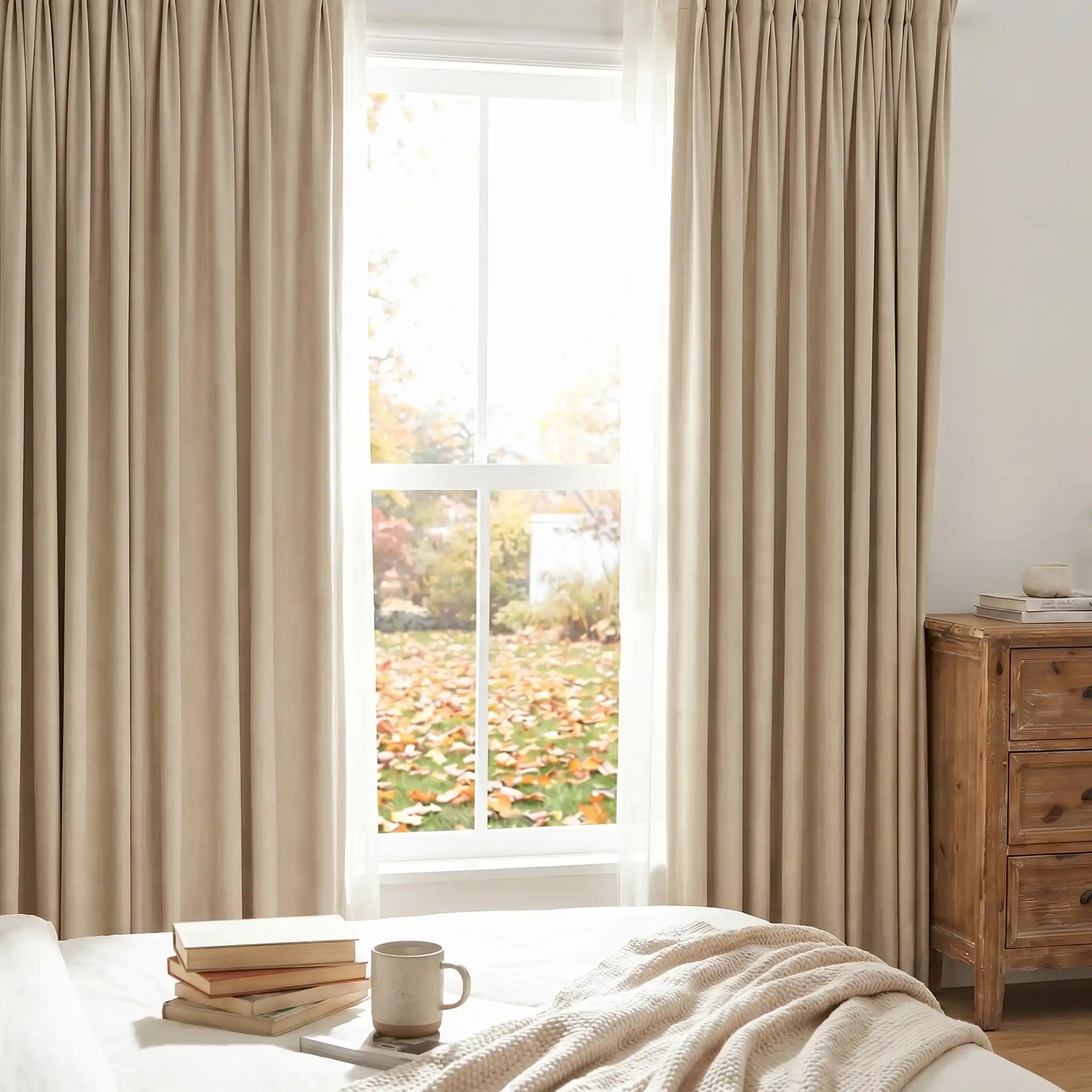
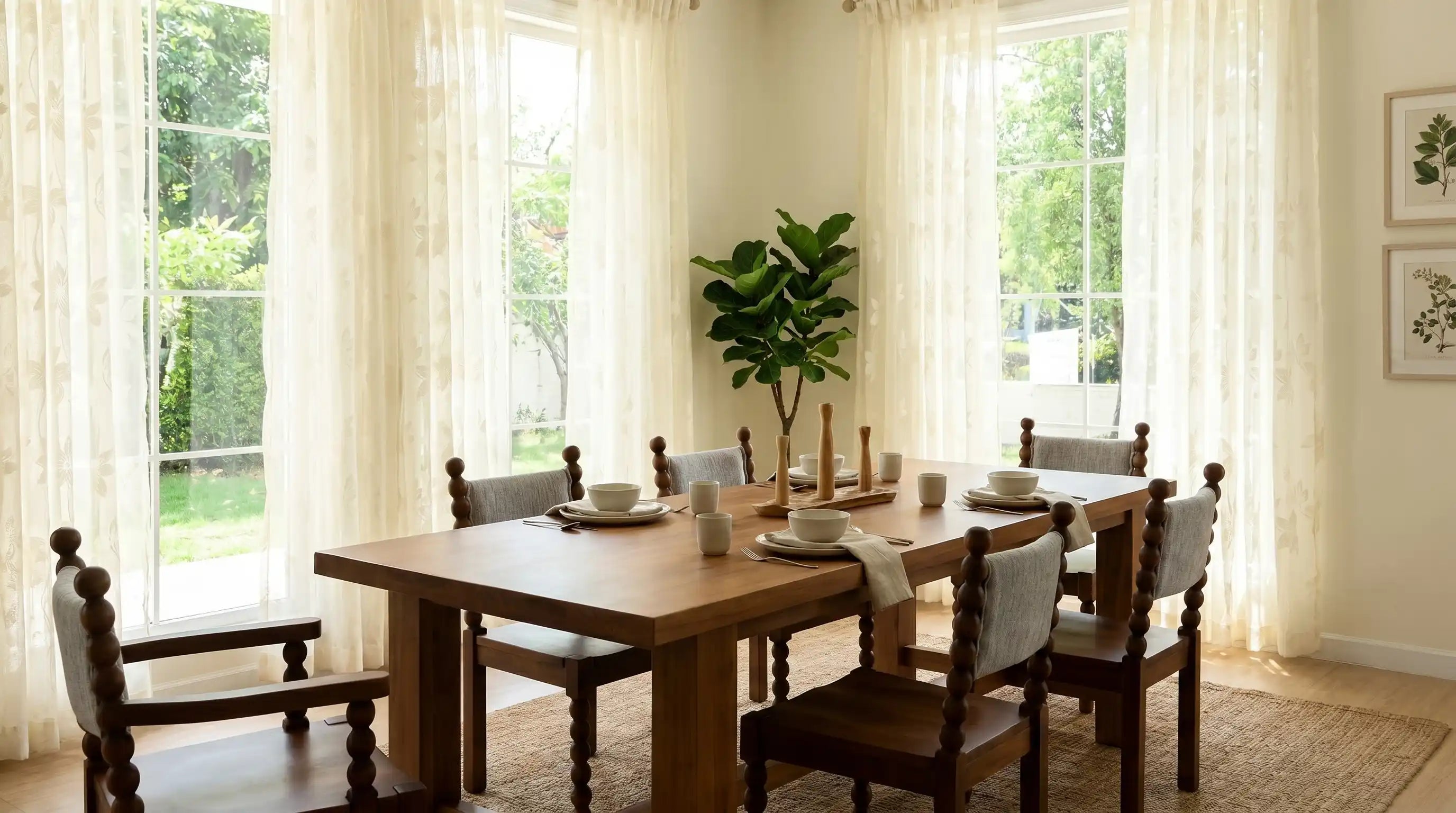
The dining room is one of the most underrated spaces to get curtains right. It's a room that's used at different times of day, in different kinds of light, for everything from quick weekday dinners to longer weekend gatherings. The curtains have to work across all of those moments — and when they do, the room feels noticeably more complete.
Here's how to think through dining room curtain ideas without overcomplicating it.
Texture Is the Right Starting Point
In a dining room, texture almost always outperforms pattern. The room already has a lot going on — furniture, tableware, lighting, often artwork — and a busy curtain print tends to add visual noise rather than warmth. A beautifully textured solid, on the other hand, adds depth and interest without competing.
Linen curtains are a natural fit here. The slight irregularity of linen weave catches light in a way that feels organic and warm, and the fabric has an inherent quality that reads as considered without being fussy. For a more formal dining room, velvet curtains bring a richness and weight that works especially well in rooms with lower light or a more traditional aesthetic.

Formal Versus Relaxed — How to Read Your Room
The mood you want the dining room to carry should guide the treatment. A relaxed, everyday dining space usually benefits from lighter fabrics and a more casual hang — linen panels with a simple rod pocket or tab top, for example. A more formal room, or one used primarily for entertaining, can support something with more structure: a pinch pleat heading, a heavier fabric, a deeper color.
Neither is wrong. The mistake is choosing a treatment that fights the room's natural register — putting something very formal in a casual family dining room, or something too relaxed in a space that's meant to feel special.
Color That Adds Warmth Without Heaviness
Dining rooms tend to benefit from warm tones — not necessarily bold or saturated, but colors that make the room feel welcoming rather than cool or clinical. Warm whites, soft taupes, terracottas, and deep earthy greens all work well depending on the room's existing palette.
The key is to avoid colors that feel too stark or too heavy for the scale of the room. When in doubt, pull a tone from something already in the room — the wood of the table, the color of the walls, the tones in a rug — and work from there.
If you want something that ships quickly, ready-to-ship curtains are worth browsing — there's often more variety than people expect, and the turnaround is significantly faster than custom.
Getting the Proportions Right
The same rules apply here as in any room: hang the rod high, extend it wide, and let the fabric reach the floor. In a dining room, this is especially important because the table and chairs already occupy a lot of visual real estate at mid-height. Curtains that hang properly — from near the ceiling to the floor — frame the room vertically and balance the horizontal weight of the furniture.
If your windows are non-standard or you want a truly tailored result, custom curtains give you full control over width, length, heading style, and lining — so the final result fits the room exactly as intended.

Final Thoughts
Dining room curtain ideas don't need to be complicated. Start with texture over pattern, let the room's mood guide the formality level, choose a color that adds warmth rather than contrast, and get the proportions right. When those four things line up, the curtains stop being something you notice and start being something that makes the whole room feel better — which is exactly the point.