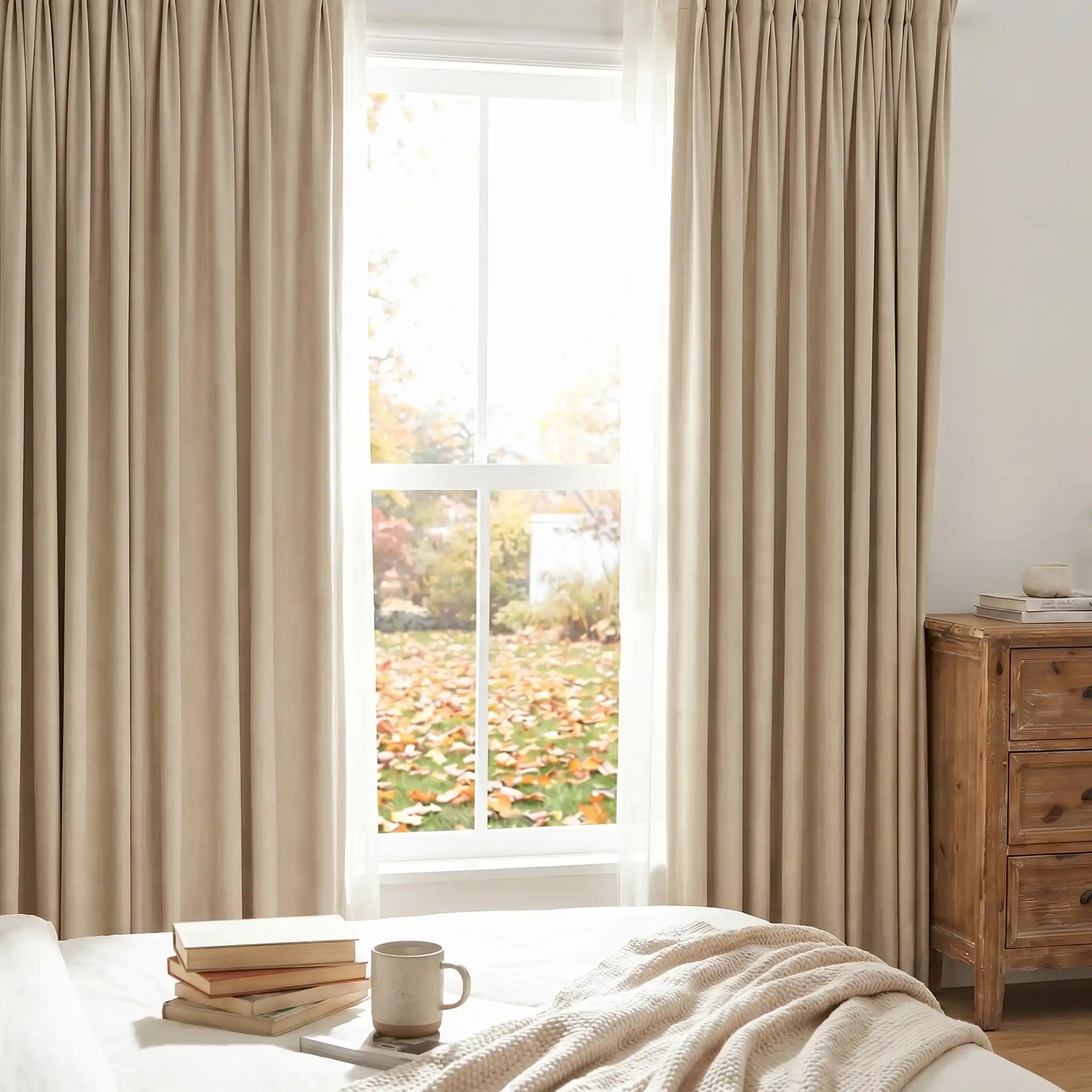
Room Ideas

What Are the Best Lightweight Bedroom Curtains for Hot Climates
In a warm climate, bedroom curtains cannot be chosen by appearance alone. A beautiful curtain that traps heat or blocks airflow may make the room feel uncomfortable very quickly. For hot-weather bedrooms, the better option is usually a lightweight curtain that can soften strong sunlight, let the room breathe, and keep the space feeling calm and fresh. Materials such as linen, cotton, voile, bamboo-blend fabric, and lightweight performance fabrics are commonly used because they feel airy and are easier to maintain in warm conditions. Light colors also help, since they reflect more sunlight than dark shades and keep the room from feeling visually heavy. The purpose is not to turn the bedroom into a completely shaded cave. A good curtain for hot climates should reduce glare, protect some privacy, and still allow daylight and air to move naturally through the space. Why Bedrooms in Hot Climates Need the Right Curtains Bedrooms in hotter regions deal with issues that are less noticeable in cooler homes. Direct sun can raise the room temperature, humidity can make fabrics feel damp or heavy, and poor airflow can leave the space feeling stuffy by the end of the day. Thick curtains may seem like the obvious solution because they block sunlight, but they are not always the most comfortable choice. In many warm-weather homes, heavy drapes can make the bedroom feel darker, denser, and less ventilated. Lightweight curtains offer a softer alternative because they reduce harsh light without closing off the window completely. For hot climates, bedroom curtains should ideally support: Better heat control Softer natural light Improved air movement Moisture and humidity management Basic UV protection Easy washing and daily care The best curtains for this environment are light in feel but reliable in performance. They should handle daily sun exposure while helping the bedroom stay brighter, cooler, and more breathable. Key Features of Lightweight Bedroom Curtains for Warm Weather Hot-climate curtains should feel light, practical, and comfortable in everyday use. The following features are especially important. Breathable Fabric Breathability should be one of the first things to check. A breathable curtain does not trap warm air tightly around the window. Instead, it allows the room to feel more open, especially when there is a breeze or a fan running. Good breathable curtain fabrics include: Linen Cotton Cotton-linen blends Voile Bamboo fiber Lightweight polyester sheers Looser weaves and semi-sheer fabrics are especially useful in warm bedrooms. They allow the window area to feel less sealed off, which helps prevent that heavy, stuffy feeling common in hot rooms. Sunlight and UV Control Strong sunlight can make a bedroom uncomfortable and can also fade bedding, rugs, flooring, and furniture over time. Even a lightweight curtain should provide some level of sun protection. Curtains with better sunlight control can help: Soften harsh daylight Reduce glare near beds, desks, or mirrors Protect interior fabrics from fading Make the room feel calmer during bright hours For bedrooms that receive intense sun, lightweight curtains with UV-resistant qualities are a smart choice. Another practical option is to combine light curtains with blinds, solar shades, or window film for added protection. Heat-Reflecting Color Color affects comfort more than many people expect. Dark curtains absorb more heat, while lighter colors reflect more sunlight and help the bedroom feel cooler. Good color choices for hot climates include: White Ivory Cream Light beige Pale gray Soft sand Natural linen shades These colors are especially helpful for windows that face strong afternoon sun. They also make the bedroom look brighter and more spacious. Moisture-Friendly Fabric In humid or tropical climates, curtains need to dry quickly and resist that damp, heavy feeling. Thick fabrics can hold moisture, especially if the room has poor ventilation. Look for curtains that are: Quick-drying Lightweight Machine washable Easy to shake out or air Less likely to develop musty odors Polyester voile, cotton blends, and durable performance fabrics are often practical choices because they are easier to clean and maintain in humid conditions. Better Airflow Around the Window One reason lightweight curtains work well in hot bedrooms is that they do not close off the window area as much as heavy drapes. When the window is open, the fabric can move gently with the air instead of blocking circulation. They work especially well with: Ceiling fans Open windows Cross-breezes Sliding glass doors Balcony doors In a warm bedroom, shade is useful, but airflow is just as important. A curtain that lets the room breathe can make the space feel noticeably more comfortable. Top Curtain Materials for Hot Climate Homes Each fabric creates a slightly different feeling in the room. Some are better for airflow, some are easier to maintain, and some are stronger against sun exposure. Linen: Best for a Natural, Breezy Look Linen is a strong choice for hot climates because it feels open, textured, and naturally relaxed. It lets the bedroom feel airy instead of sealed off. Linen curtains are especially suitable for: Coastal bedrooms Scandinavian interiors Organic modern spaces Minimalist rooms Bedrooms that need soft daylight The only thing to remember is that pure linen wrinkles easily. For a cleaner look with less maintenance, a linen blend is usually more practical. Cotton: Best for Everyday Bedrooms Cotton gives a bedroom a soft, clean, and comfortable look. It is easy to style and works well in casual homes, family bedrooms, and guest rooms. Cotton curtains are a good fit for: Daily-use bedrooms Rental homes Family spaces Simple modern interiors Rooms that need washable curtains Pure cotton can shrink or crease after washing, so a cotton blend may be a better option if you want easier care. Voile: Best for Bright Natural Light Voile is very light and sheer, which makes it useful for bedrooms that need brightness without harsh glare. It creates a soft, floating effect around the window. Voile curtains work well when you want: More daylight A breezy window style Softened sunlight A visually open room Easy curtain movement Because voile is quite transparent, it may not provide enough privacy at night. In street-facing or apartment bedrooms, pair it with blinds, shades, or a second curtain layer. Bamboo Fiber: Best for an Eco-Friendly Feel Bamboo-based curtain fabrics can bring a natural and calm look to warm bedrooms. They often feel smooth, soft, and light, making them a good match for relaxed interiors. Bamboo fiber curtains may suit: Eco-conscious homes Tropical-style bedrooms Natural modern interiors Rooms with wood or rattan furniture Spaces that need a softer organic texture Check the fabric blend before buying, because bamboo curtains can vary in durability, washability, and drape. Performance Blends: Best for Durability Performance blends are helpful in hot climates because they are designed to handle daily wear better than many delicate fabrics. They are especially useful in sunny, humid, or high-use bedrooms. Performance fabric curtains may offer: Better fade resistance Faster drying Less wrinkling Improved shape retention Easier cleaning More durability under sunlight For warm-weather bedrooms, performance blends are a practical choice when you want curtains that still look light but can stand up to heat, humidity, and regular use. How Curtain Colors Affect Indoor Temperature For bedrooms in hot climates, curtain color is not only about appearance. It can change how much sunlight the fabric reflects and how much warmth it keeps near the window. Best Light Colors for Reflecting Heat Pale curtain colors usually work better in warm rooms. They reflect more sunlight and help the bedroom feel lighter and cooler. Best options include: White Warm white Ivory Cream Light beige Pale gray Soft taupe Sand These shades can also make smaller or darker bedrooms feel more open. Neutral Shades for Modern Interiors Neutral colors are useful in modern bedrooms because they are easy to pair with different furniture, bedding, and wall colors. They also tend to stay stylish longer than bold seasonal colors. Good modern neutrals include: Oatmeal Stone Greige Natural linen Soft gray Off-white These tones give the room a quiet, balanced look without making the window area feel too stark. Colors to Avoid in Hot Climates Dark curtains usually absorb more heat, which can make a sunny bedroom feel warmer during the day. Use caution with: Black Navy Charcoal Deep brown Burgundy Dark green Heavy jewel tones These colors can still work in cooler rooms or with strong air conditioning, but they are usually not the best starting choice for hot climates. Choosing Lightweight Curtains Based on Window Orientation The direction a bedroom window faces affects how much light, glare, and heat the room receives. Choosing curtains by window orientation helps the space stay more comfortable throughout the day. East-Facing Bedrooms East-facing bedrooms catch the morning sun. The light is often clear and bright, but it is usually gentler than late-day sunlight. Best choices: Sheer curtains Cotton voile Linen blends Light-filtering panels Pale neutral colors These curtains keep the room bright in the morning while softening direct glare. South-Facing Bedrooms South-facing bedrooms may receive steady sunlight for many hours, depending on the home’s location and the season. Best choices: UV-resistant lightweight curtains Light-colored linen blends Semi-sheer performance fabrics Layered curtains with blinds Solar shades plus sheers For this direction, the curtains should help manage both brightness and heat. West-Facing Bedrooms West-facing bedrooms often get the strongest heat in the afternoon. In warm climates, this can make the room feel uncomfortable quickly. Best choices: Light-colored curtains UV-resistant fabrics Semi-sheer curtains with blinds Lightweight curtains plus blackout or thermal backing Reflective window shades In west-facing rooms, lightweight curtains may need extra support during peak afternoon sun. North-Facing Bedrooms North-facing bedrooms usually receive softer, indirect daylight. They often need less heat control than other orientations. Best choices: Voile Sheer linen Cotton blends White or cream curtains Simple light-filtering panels The focus here is to keep the space bright, soft, and easy to live in. Best Lightweight Bedroom Curtains for Different Home Types Curtain choice also depends on the kind of home you live in. An apartment, a single-family house, a coastal home, and a tiny home all have different needs for privacy, airflow, and space. Apartments Apartment bedrooms usually need a balance of privacy, simple installation, and daylight control. Best options: Semi-sheer curtains Lightweight polyester blends Sheer curtains with blinds No-drill curtain solutions Neutral light-filtering panels If the bedroom faces nearby buildings, very transparent sheers should not be used as the only window covering. Single-Family Homes Single-family homes often offer more flexibility with window treatments and airflow. Curtain choice can depend more on window direction and how much privacy the room needs. Best options: Linen curtains Cotton blends Voile panels Layered curtains UV-resistant sheers for sunny windows Bedrooms facing private yards can usually use more transparent fabrics than rooms facing the street. Coastal Homes Coastal homes usually need curtains that feel breathable, handle moisture well, and create a relaxed look. Best options: Linen blends Cotton voile White sheers Bamboo fiber curtains Quick-drying polyester voile Heavy curtains are usually less suitable because they can hold moisture and make the room feel too formal. Tiny Homes Tiny homes need curtains that do not take up much visual or physical space. The goal is to keep the sleeping area open and uncluttered. Best options: Slim sheer panels Light-colored curtains Ceiling-mounted tracks Short or exact-length curtains Washable lightweight fabrics In a tiny home, thick or bulky curtains can make the space feel smaller very quickly. Energy-Saving Benefits of Lightweight Bedroom Curtains Lightweight bedroom curtains are often picked for their clean, airy look, but they can do more than make a room look softer. In the right setting, they can help control sunlight, keep air moving, and make the bedroom easier to cool during warmer months. They are not a replacement for heavy thermal curtains, especially in extreme heat. Still, for everyday use, they offer a practical balance between comfort, privacy, and energy efficiency. Keeping Harsh Sunlight Under Control A bare window lets sunlight fall directly onto the bed, floor, and furniture. Once those surfaces warm up, the whole room can start to feel hotter. Lightweight curtains create a soft barrier, spreading the light more evenly and reducing the sharp glare that often comes with direct sun. Color matters here. Pale curtains usually perform better than dark ones because they reflect more light instead of absorbing it. White, ivory, cream, light beige, linen, and soft gray are all good choices for bedrooms that get plenty of sun. For better heat control, lightweight curtains can be used with: UV-resistant fabric Solar shades Reflective blinds Window film Outdoor shade from trees, shutters, or awnings A simple habit also helps: close the curtains before the strongest sun reaches the window, not after the room has already heated up. Letting Fresh Air Move Through the Room One reason lightweight curtains work well in bedrooms is that they do not make the space feel sealed off. Thicker curtains can block airflow around the window, while lighter fabrics allow a breeze to pass through more easily. This is especially useful in warm or humid weather. When windows are open, the curtains can still provide some privacy while letting the room breathe. They are helpful when: You open the windows in the early morning or evening The bedroom gets a natural cross-breeze A ceiling fan or standing fan is running The room tends to feel humid or stuffy You want privacy without making the room dark A bedroom does not always need a big temperature drop to feel better. Better air circulation alone can make the space feel much more comfortable. Cutting Down on Cooling Use in Small Ways Lightweight curtains can support energy savings in a quiet, everyday way. Since they allow natural daylight in, you may not need to use lamps as often during the day. At the same time, by softening sunlight and improving airflow, they can help the room stay comfortable for longer before air conditioning is needed. The savings may not be dramatic on their own, but they are still useful as part of a broader cooling strategy. For hotter rooms, pair lightweight curtains with: Blackout liners Thermal blinds Solar shades Reflective window film Exterior shading A layered window setup often works best. Use lightweight curtains for daylight, airflow, and softness, then add stronger heat-blocking layers when the sun or temperature becomes more intense. This keeps the bedroom comfortable without making it feel heavy or closed in. Interior Design Trends for Hot Climate Bedrooms in 2026 Bedroom design in hot climates is moving toward breathable textures, natural colors, and relaxed comfort. Curtains play a major role in that atmosphere. Coastal Interior Style Coastal bedrooms work beautifully with lightweight curtains because the style depends on brightness and softness. Recommended curtains: White voile Sheer linen Cotton curtains Sand-colored panels Soft blue-gray sheers The look should feel breezy, not overly decorated. Mediterranean-Inspired Bedrooms Mediterranean bedrooms often use warm neutrals, textured walls, natural wood, and soft fabrics. Recommended curtains: Linen curtains Cream cotton blends Warm white sheers Natural beige panels Textured lightweight fabrics This style benefits from curtains that filter strong sunlight while preserving warmth and character. Tropical Modern Design Tropical modern bedrooms combine clean lines with natural textures. Recommended curtains: Bamboo fiber blends White sheers Light linen blends Performance fabric sheers Soft neutral panels Pair curtains with wood, rattan, greenery, and breathable bedding for a cohesive look. Sustainable Home Décor Sustainability continues to influence curtain choices. Homeowners are looking for long-lasting, natural-looking, and easy-care textiles. Popular choices include: Linen Organic cotton Bamboo blends Recycled polyester sheers Durable neutral curtains A sustainable curtain choice should last, wash well, and work with changing décor over time. Frequently Asked Questions Here are quick answers to common questions about lightweight bedroom curtains for hot climates. What Fabric Stays Coolest in Hot Climates? Linen is one of the coolest curtain fabrics because it is highly breathable and naturally airy. Cotton, voile, and bamboo blends are also good choices for warm bedrooms. For easy care, a linen-polyester or cotton-polyester blend may be more practical than pure natural fabric. Do Lightweight Bedroom Curtains Reduce Heat? Yes, lightweight curtains can reduce some heat by filtering sunlight and reducing glare. However, they do not block heat as strongly as blackout or thermal curtains. For very hot rooms, combine lightweight curtains with blinds, solar shades, or heat-reflective window treatments. Which Curtain Color Reflects the Most Sunlight? White reflects the most sunlight. Other strong choices include ivory, cream, pale gray, and light beige. Light colors are usually best for hot climates because they absorb less heat than dark colors. Are Lightweight Curtains Suitable for Tropical Climates? Yes. Lightweight curtains are suitable for tropical climates because they allow better airflow and dry faster than heavy drapes. Choose breathable, washable, quick-drying fabrics to reduce moisture problems. Can Lightweight Curtains Lower Energy Bills? They may help lower energy use by reducing glare, supporting natural daylight, and improving ventilation. For major cooling savings, they work best when combined with solar shades, blinds, or reflective treatments. Lightweight curtains are most effective as part of a larger heat-control strategy. Should I Combine Lightweight Curtains With Blinds? Yes, especially if your bedroom gets strong sun or needs privacy at night. Lightweight curtains provide softness and daylight, while blinds offer adjustable privacy and heat control. This combination is very practical for apartments, west-facing bedrooms, and tropical homes. For hot climates, the best lightweight bedroom curtains are breathable, light-colored, easy to clean, and suited to your window direction. Linen, cotton, voile, bamboo fiber, and performance blends are all strong options, but the right choice depends on your room’s heat, humidity, sunlight, and privacy needs. A good rule is simple: Bedroom Condition Best Curtain Choice Very humid climate Quick-drying voile or polyester blend Strong afternoon sun UV-resistant semi-sheer curtains with blinds Coastal bedroom Linen or cotton voile Small hot bedroom White or ivory sheer curtains Privacy concern Semi-sheer curtains plus shades Eco-conscious home Linen, cotton, or bamboo blends For most warm-weather bedrooms, lightweight curtains are best when they create a balance: enough softness to make the room comfortable, enough openness to support airflow, and enough coverage to reduce harsh sunlight. The right curtains can make a hot bedroom feel calmer, cooler, and much easier to enjoy every day.
Learn more
Room Privacy Curtains for Small Apartments: Space-Saving Ideas in 2026
Room Privacy Curtains for Small Apartments in 2026 Living in small apartments has become normal in many cities, especially in high-density urban areas. In 2026, more people are choosing compact studios or shared housing because of cost and location. The challenge is that these spaces often serve multiple purposes at once—sleeping, working, relaxing, and sometimes even eating in the same area. Privacy becomes difficult when there are no separate rooms. Building walls is usually not an option for renters, and even for homeowners, it is expensive and permanent. This is where room privacy curtains offer a simple alternative. They help divide space without major construction and can be adjusted whenever the layout needs to change. What Are Room Privacy Curtains? Room privacy curtains are fabric-based dividers used to separate areas within a single room. Unlike fixed walls, they are flexible and can be opened or closed depending on how much privacy is needed. They are commonly used in apartments, dorm rooms, and shared living spaces. The materials vary depending on the purpose. Some are light and decorative, while others are thicker and designed to block light or reduce sound. Installation is usually simple. Many systems use ceiling-mounted tracks, tension rods, or wall brackets. This makes them suitable for both permanent homes and rental spaces where drilling options may be limited. Benefits of Room Privacy Curtains for Small Apartments Space-Saving Flexibility One of the main reasons people choose privacy curtains is flexibility. They allow a single room to function in multiple ways without making permanent changes. A living room can quickly become a bedroom at night or a workspace during the day. Cost-Effective Solution Compared to building partitions or installing sliding doors, curtains are much more affordable. This makes them especially practical for renters or people who move frequently. Better Privacy in Shared Living In shared apartments, personal space is often limited. Curtains help create a visual barrier, giving each person a sense of separation without closing off the room completely. Simple Interior Upgrade Beyond function, curtains can also improve the look of a space. They soften the room visually and can match different interior styles without requiring major redesign. Best Use Cases in Urban Small Apartments Studio Apartments In studio layouts, everything is typically in one open space. Curtains can separate the sleeping area from the living space, making the apartment feel more organized and comfortable. Shared Housing For roommates, privacy curtains help define individual areas. This can be especially useful when there is no extra room for private use. Home Office Areas With more people working from home, having a dedicated workspace matters. Curtains can be used to temporarily block off a corner of a room, helping reduce distractions. Multi-Use Rooms Some apartments combine living rooms with gyms, study areas, or guest spaces. Curtains make it easier to switch between uses without rearranging furniture. Types of Room Privacy Curtains Blackout Curtains These are thicker curtains designed to block light. They are often used for sleeping areas or spaces that need full visual privacy. Semi-Sheer Curtains These allow some natural light through while still offering partial separation. They work well in spaces where complete isolation is not needed. Sound-Reducing Curtains While not fully soundproof, these curtains can help reduce noise levels. They are often used in home offices or shared apartments. Ceiling Track Curtains These are installed on a track mounted to the ceiling. They move smoothly and create a cleaner, more built-in look compared to rod systems. How to Choose the Right Room Privacy Curtains Choosing the right curtains depends on how the space is used. For sleeping areas, thicker fabrics usually work better. For general room division, lighter materials may be enough. The size of the apartment also matters. In smaller spaces, heavy or dark curtains can make the room feel tighter, so lighter colors are often preferred. Installation is another factor. Renters may prefer tension rods or removable tracks, while homeowners can consider more permanent ceiling-mounted systems. Finally, durability and maintenance should be considered, especially for daily-use partitions that will be opened and closed often. Installation Tips for Small Apartments Before installing curtains, it helps to measure the space carefully, especially ceiling height and width. Incorrect sizing can affect both appearance and function. In rental apartments, damage-free installation methods are usually better. Tension rods or adhesive track systems can be useful in these cases. Lightweight fabrics are easier to operate and reduce strain on the mounting system. They also tend to move more naturally in small spaces where airflow is limited. Interior Design Ideas Using Room Privacy Curtains Room privacy curtains are not only functional but can also be part of the interior design. Neutral colors like beige, gray, or white blend well with minimalist spaces. In Scandinavian-style apartments, light fabrics help keep the space bright and open. In industrial-style interiors, darker tones can add contrast without making the room feel heavy. Some people also use curtains as a design feature, such as creating soft divisions between zones instead of hard boundaries. Common Mistakes to Avoid One common mistake is choosing curtains that are too heavy for a small space. This can make the room feel closed in and reduce natural light. Another issue is incorrect installation height. Curtains that hang too low can visually shrink the room. It is also important to consider airflow. Blocking too much circulation can make small apartments feel uncomfortable, especially in warmer climates. Finally, color choice should match the overall room design. A mismatched curtain can stand out in a way that feels unbalanced. Future Trends for Room Privacy Curtains in 2026 In 2026, more attention is being given to flexible living solutions. One trend is the use of smart curtain systems that can be controlled automatically, similar to smart blinds. There is also growing interest in sustainable materials, including recycled fabrics and eco-friendly manufacturing processes. Modular apartment design is another direction, where interiors are built to be reconfigured easily. Privacy curtains fit naturally into this approach because they allow spaces to change without construction. Room privacy curtains are a simple and practical way to make better use of limited space in small urban apartments. They help create flexible zones within a single room, making it easier to switch between living, sleeping, and working without permanent construction or major renovation. As urban living continues to shift toward smaller and more multifunctional homes, demand for adaptable interior solutions keeps growing. Products like those offered by DWCN provide an easy way to divide space while maintaining a clean and comfortable look, making them a useful option for people looking to improve both privacy and layout efficiency in modern apartments.
Learn more
Modern Curtain Ideas for Open-Concept Homes
When a room feels warm, calm, and easy to be in, the window treatment usually deserves part of the credit. Great ideas do not always announce themselves loudly; they often work in the background, shaping light and texture so the whole room feels more considered. That is exactly the lens to use for modern curtain ideas. Instead of asking what is most popular, ask what will still feel right six months after installation. A room that works beautifully day and night will always age better than one that was styled for the first impression alone. Consistency Across Connected Rooms Start here: consistency across connected rooms. This is the point that usually determines whether the final result feels obvious in a good way or slightly compromised. In a bright room, for example, the best-looking treatment often ends up being the one that manages daylight calmly instead of fighting it. This is also where material and construction matter. Modern curtains tend to work best when the goal is a softer, more natural finish, while open concept living room curtains earn their place when coverage, structure, or ease of use matter more than visual lightness alone. For a softer, natural finish across connected spaces, consider the Custom Linen Sheer Solid Curtains — a clean, minimal option that keeps the light feeling consistent from room to room. If you prefer a subtle gradient effect, the Custom Linen Texture Ombre Sheer Curtains add quiet visual interest without disrupting the flow. Clean Headings and Minimal Fabrics The real question behind this topic is clean headings and minimal fabrics. Once that is clear, many of the usual shopping distractions fall away. Features that sound equally appealing on a product page suddenly show their strengths and weaknesses much more honestly. That is where open concept living room curtains can be a smart move. It helps when you want the room to feel lighter, calmer, and more settled rather than overworked. By contrast, a more structured window treatment is often better when the room needs more control, more definition, or a little extra confidence around the window. The Custom Vertical Ombre Linen Texture Sheer Curtains strike this balance well — light enough to keep an open-plan space airy, with enough visual structure to define the window zone. Softening Large Open Spaces Without Clutter Start here: softening large open spaces without clutter. This is the point that usually determines whether the final result feels obvious in a good way or slightly compromised. In a bright room, for example, the best-looking treatment often ends up being the one that manages daylight calmly instead of fighting it. That is where sheer curtains can be a smart move. They help when you want the room to feel lighter, calmer, and more settled rather than overworked. By contrast, a heavier fabric is often better when the room needs more control, more definition, or a little extra confidence around the window. If you want softness with a touch of warmth, the DWCN White Faux Linen Sheer Curtains with Tiebacks are a practical choice — the integrated tiebacks keep large panels looking neat without extra hardware. A Practical Takeaway It also helps to picture the room on an ordinary weekday instead of in a styled photo. Will the window be opened often? Is there furniture nearby? Does the space need blackout at night but softness during the day? Those questions usually lead to better decisions than trend lists do. Final Thoughts If you want a window treatment that still feels right after the novelty wears off, choose the one that respects the room's real needs first. That is the most reliable path to getting modern curtain ideas right.
Learn more
Kitchen Curtain Ideas: Practical and Beautiful Window Solutions
Discover kitchen curtain ideas that are both practical and beautiful — from easy-care fabrics to styles that keep the room bright, workable, and good-looking.
Learn more
Curtain Ideas for Home Office Windows
Find the best home office curtain ideas for glare control, a polished video call background, and a focused, productive workspace.
Learn more
Curtain Ideas for Nursery Rooms: Soft, Safe, and Light-Controlled
Find the best nursery curtain ideas that balance blackout performance, child-safe design, and soft, washable materials for a calm and restful baby room.
Learn more
Curtain Ideas for Guest Rooms That Feel Warm and Inviting
Discover guest room curtain ideas that make visitors feel genuinely welcome — with advice on privacy, light control, easy palettes, and fabrics that work for everyone.
Learn more
Bathroom Window Curtain Ideas for Privacy and Light
Find the best bathroom window curtain ideas that balance privacy and natural light — with practical advice on materials, styles, and humidity-resistant fabrics.
Learn more
Curtain Ideas for Large Windows and Tall Ceilings
Discover curtain ideas for large windows and tall ceilings — from custom length and generous fullness to keeping scale elegant and proportions exactly right.
Learn more