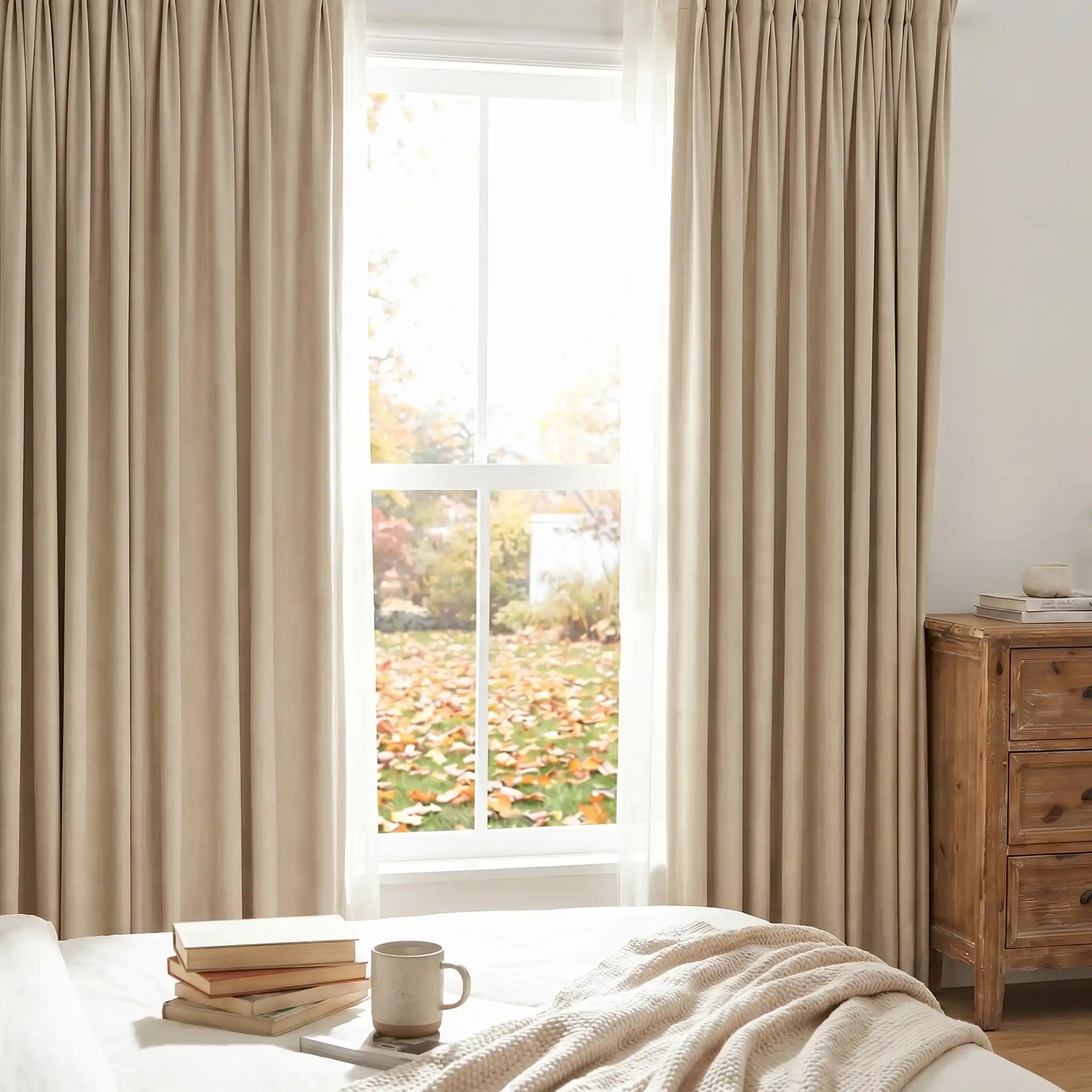
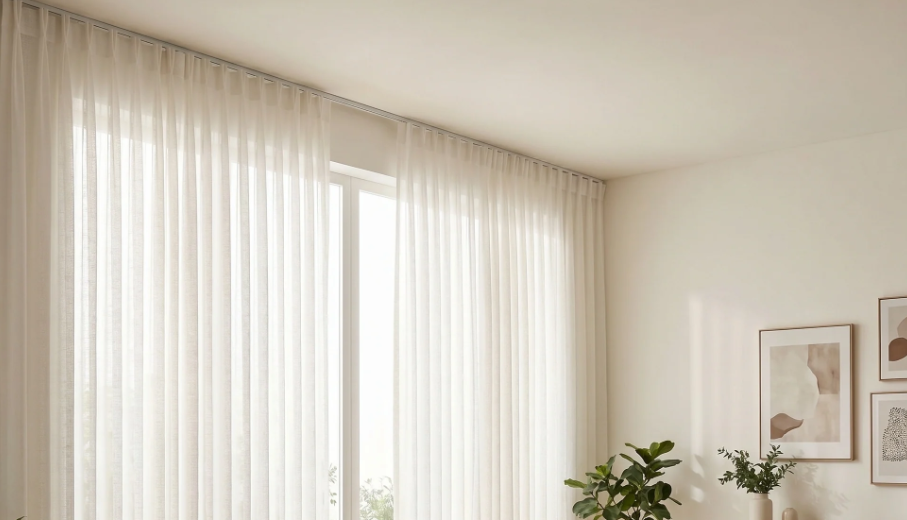
In a warm climate, bedroom curtains cannot be chosen by appearance alone. A beautiful curtain that traps heat or blocks airflow may make the room feel uncomfortable very quickly. For hot-weather bedrooms, the better option is usually a lightweight curtain that can soften strong sunlight, let the room breathe, and keep the space feeling calm and fresh.
Materials such as linen, cotton, voile, bamboo-blend fabric, and lightweight performance fabrics are commonly used because they feel airy and are easier to maintain in warm conditions. Light colors also help, since they reflect more sunlight than dark shades and keep the room from feeling visually heavy.
The purpose is not to turn the bedroom into a completely shaded cave. A good curtain for hot climates should reduce glare, protect some privacy, and still allow daylight and air to move naturally through the space.
Why Bedrooms in Hot Climates Need the Right Curtains
Bedrooms in hotter regions deal with issues that are less noticeable in cooler homes. Direct sun can raise the room temperature, humidity can make fabrics feel damp or heavy, and poor airflow can leave the space feeling stuffy by the end of the day.
Thick curtains may seem like the obvious solution because they block sunlight, but they are not always the most comfortable choice. In many warm-weather homes, heavy drapes can make the bedroom feel darker, denser, and less ventilated. Lightweight curtains offer a softer alternative because they reduce harsh light without closing off the window completely.
For hot climates, bedroom curtains should ideally support:
- Better heat control
- Softer natural light
- Improved air movement
- Moisture and humidity management
- Basic UV protection
- Easy washing and daily care
The best curtains for this environment are light in feel but reliable in performance. They should handle daily sun exposure while helping the bedroom stay brighter, cooler, and more breathable.
Key Features of Lightweight Bedroom Curtains for Warm Weather
Hot-climate curtains should feel light, practical, and comfortable in everyday use. The following features are especially important. 
Breathable Fabric
Breathability should be one of the first things to check. A breathable curtain does not trap warm air tightly around the window. Instead, it allows the room to feel more open, especially when there is a breeze or a fan running.
Good breathable curtain fabrics include:
- Linen
- Cotton
- Cotton-linen blends
- Voile
- Bamboo fiber
- Lightweight polyester sheers
Looser weaves and semi-sheer fabrics are especially useful in warm bedrooms. They allow the window area to feel less sealed off, which helps prevent that heavy, stuffy feeling common in hot rooms.
Sunlight and UV Control
Strong sunlight can make a bedroom uncomfortable and can also fade bedding, rugs, flooring, and furniture over time. Even a lightweight curtain should provide some level of sun protection.
Curtains with better sunlight control can help:
- Soften harsh daylight
- Reduce glare near beds, desks, or mirrors
- Protect interior fabrics from fading
- Make the room feel calmer during bright hours
For bedrooms that receive intense sun, lightweight curtains with UV-resistant qualities are a smart choice. Another practical option is to combine light curtains with blinds, solar shades, or window film for added protection.
Heat-Reflecting Color
Color affects comfort more than many people expect. Dark curtains absorb more heat, while lighter colors reflect more sunlight and help the bedroom feel cooler.
Good color choices for hot climates include:
- White
- Ivory
- Cream
- Light beige
- Pale gray
- Soft sand
- Natural linen shades
These colors are especially helpful for windows that face strong afternoon sun. They also make the bedroom look brighter and more spacious.
Moisture-Friendly Fabric
In humid or tropical climates, curtains need to dry quickly and resist that damp, heavy feeling. Thick fabrics can hold moisture, especially if the room has poor ventilation.
Look for curtains that are:
- Quick-drying
- Lightweight
- Machine washable
- Easy to shake out or air
- Less likely to develop musty odors
Polyester voile, cotton blends, and durable performance fabrics are often practical choices because they are easier to clean and maintain in humid conditions.
Better Airflow Around the Window
One reason lightweight curtains work well in hot bedrooms is that they do not close off the window area as much as heavy drapes. When the window is open, the fabric can move gently with the air instead of blocking circulation.
They work especially well with:
- Ceiling fans
- Open windows
- Cross-breezes
- Sliding glass doors
- Balcony doors
In a warm bedroom, shade is useful, but airflow is just as important. A curtain that lets the room breathe can make the space feel noticeably more comfortable.
Top Curtain Materials for Hot Climate Homes
Each fabric creates a slightly different feeling in the room. Some are better for airflow, some are easier to maintain, and some are stronger against sun exposure.
Linen: Best for a Natural, Breezy Look
Linen is a strong choice for hot climates because it feels open, textured, and naturally relaxed. It lets the bedroom feel airy instead of sealed off.
Linen curtains are especially suitable for:
- Coastal bedrooms
- Scandinavian interiors
- Organic modern spaces
- Minimalist rooms
- Bedrooms that need soft daylight
The only thing to remember is that pure linen wrinkles easily. For a cleaner look with less maintenance, a linen blend is usually more practical.
Cotton: Best for Everyday Bedrooms
Cotton gives a bedroom a soft, clean, and comfortable look. It is easy to style and works well in casual homes, family bedrooms, and guest rooms.
Cotton curtains are a good fit for:
- Daily-use bedrooms
- Rental homes
- Family spaces
- Simple modern interiors
- Rooms that need washable curtains
Pure cotton can shrink or crease after washing, so a cotton blend may be a better option if you want easier care.
Voile: Best for Bright Natural Light
Voile is very light and sheer, which makes it useful for bedrooms that need brightness without harsh glare. It creates a soft, floating effect around the window.
Voile curtains work well when you want:
- More daylight
- A breezy window style
- Softened sunlight
- A visually open room
- Easy curtain movement
Because voile is quite transparent, it may not provide enough privacy at night. In street-facing or apartment bedrooms, pair it with blinds, shades, or a second curtain layer.
Bamboo Fiber: Best for an Eco-Friendly Feel
Bamboo-based curtain fabrics can bring a natural and calm look to warm bedrooms. They often feel smooth, soft, and light, making them a good match for relaxed interiors.
Bamboo fiber curtains may suit:
- Eco-conscious homes
- Tropical-style bedrooms
- Natural modern interiors
- Rooms with wood or rattan furniture
- Spaces that need a softer organic texture
Check the fabric blend before buying, because bamboo curtains can vary in durability, washability, and drape.
Performance Blends: Best for Durability
Performance blends are helpful in hot climates because they are designed to handle daily wear better than many delicate fabrics. They are especially useful in sunny, humid, or high-use bedrooms.
Performance fabric curtains may offer:
- Better fade resistance
- Faster drying
- Less wrinkling
- Improved shape retention
- Easier cleaning
- More durability under sunlight
For warm-weather bedrooms, performance blends are a practical choice when you want curtains that still look light but can stand up to heat, humidity, and regular use.
How Curtain Colors Affect Indoor Temperature
For bedrooms in hot climates, curtain color is not only about appearance. It can change how much sunlight the fabric reflects and how much warmth it keeps near the window.
Best Light Colors for Reflecting Heat
Pale curtain colors usually work better in warm rooms. They reflect more sunlight and help the bedroom feel lighter and cooler.
Best options include:
- White
- Warm white
- Ivory
- Cream
- Light beige
- Pale gray
- Soft taupe
- Sand
These shades can also make smaller or darker bedrooms feel more open.
Neutral Shades for Modern Interiors
Neutral colors are useful in modern bedrooms because they are easy to pair with different furniture, bedding, and wall colors. They also tend to stay stylish longer than bold seasonal colors.
Good modern neutrals include:
- Oatmeal
- Stone
- Greige
- Natural linen
- Soft gray
- Off-white
These tones give the room a quiet, balanced look without making the window area feel too stark.
Colors to Avoid in Hot Climates
Dark curtains usually absorb more heat, which can make a sunny bedroom feel warmer during the day.
Use caution with:
- Black
- Navy
- Charcoal
- Deep brown
- Burgundy
- Dark green
- Heavy jewel tones
These colors can still work in cooler rooms or with strong air conditioning, but they are usually not the best starting choice for hot climates.
Choosing Lightweight Curtains Based on Window Orientation
The direction a bedroom window faces affects how much light, glare, and heat the room receives. Choosing curtains by window orientation helps the space stay more comfortable throughout the day. 
East-Facing Bedrooms
East-facing bedrooms catch the morning sun. The light is often clear and bright, but it is usually gentler than late-day sunlight.
Best choices:
- Sheer curtains
- Cotton voile
- Linen blends
- Light-filtering panels
- Pale neutral colors
These curtains keep the room bright in the morning while softening direct glare.
South-Facing Bedrooms
South-facing bedrooms may receive steady sunlight for many hours, depending on the home’s location and the season.
Best choices:
- UV-resistant lightweight curtains
- Light-colored linen blends
- Semi-sheer performance fabrics
- Layered curtains with blinds
- Solar shades plus sheers
For this direction, the curtains should help manage both brightness and heat.
West-Facing Bedrooms
West-facing bedrooms often get the strongest heat in the afternoon. In warm climates, this can make the room feel uncomfortable quickly.
Best choices:
- Light-colored curtains
- UV-resistant fabrics
- Semi-sheer curtains with blinds
- Lightweight curtains plus blackout or thermal backing
- Reflective window shades
In west-facing rooms, lightweight curtains may need extra support during peak afternoon sun.
North-Facing Bedrooms
North-facing bedrooms usually receive softer, indirect daylight. They often need less heat control than other orientations.
Best choices:
- Voile
- Sheer linen
- Cotton blends
- White or cream curtains
- Simple light-filtering panels
The focus here is to keep the space bright, soft, and easy to live in.
Best Lightweight Bedroom Curtains for Different Home Types
Curtain choice also depends on the kind of home you live in. An apartment, a single-family house, a coastal home, and a tiny home all have different needs for privacy, airflow, and space.
Apartments
Apartment bedrooms usually need a balance of privacy, simple installation, and daylight control.
Best options:
- Semi-sheer curtains
- Lightweight polyester blends
- Sheer curtains with blinds
- No-drill curtain solutions
- Neutral light-filtering panels
If the bedroom faces nearby buildings, very transparent sheers should not be used as the only window covering.
Single-Family Homes
Single-family homes often offer more flexibility with window treatments and airflow. Curtain choice can depend more on window direction and how much privacy the room needs.
Best options:
- Linen curtains
- Cotton blends
- Voile panels
- Layered curtains
- UV-resistant sheers for sunny windows
Bedrooms facing private yards can usually use more transparent fabrics than rooms facing the street.
Coastal Homes
Coastal homes usually need curtains that feel breathable, handle moisture well, and create a relaxed look.
Best options:
- Linen blends
- Cotton voile
- White sheers
- Bamboo fiber curtains
- Quick-drying polyester voile
Heavy curtains are usually less suitable because they can hold moisture and make the room feel too formal.
Tiny Homes
Tiny homes need curtains that do not take up much visual or physical space. The goal is to keep the sleeping area open and uncluttered.
Best options:
- Slim sheer panels
- Light-colored curtains
- Ceiling-mounted tracks
- Short or exact-length curtains
- Washable lightweight fabrics
In a tiny home, thick or bulky curtains can make the space feel smaller very quickly.
Energy-Saving Benefits of Lightweight Bedroom Curtains
Lightweight bedroom curtains are often picked for their clean, airy look, but they can do more than make a room look softer. In the right setting, they can help control sunlight, keep air moving, and make the bedroom easier to cool during warmer months.
They are not a replacement for heavy thermal curtains, especially in extreme heat. Still, for everyday use, they offer a practical balance between comfort, privacy, and energy efficiency.
Keeping Harsh Sunlight Under Control
A bare window lets sunlight fall directly onto the bed, floor, and furniture. Once those surfaces warm up, the whole room can start to feel hotter. Lightweight curtains create a soft barrier, spreading the light more evenly and reducing the sharp glare that often comes with direct sun.
Color matters here. Pale curtains usually perform better than dark ones because they reflect more light instead of absorbing it. White, ivory, cream, light beige, linen, and soft gray are all good choices for bedrooms that get plenty of sun.
For better heat control, lightweight curtains can be used with:
- UV-resistant fabric
- Solar shades
- Reflective blinds
- Window film
- Outdoor shade from trees, shutters, or awnings
A simple habit also helps: close the curtains before the strongest sun reaches the window, not after the room has already heated up.
Letting Fresh Air Move Through the Room
One reason lightweight curtains work well in bedrooms is that they do not make the space feel sealed off. Thicker curtains can block airflow around the window, while lighter fabrics allow a breeze to pass through more easily.
This is especially useful in warm or humid weather. When windows are open, the curtains can still provide some privacy while letting the room breathe.
They are helpful when:
- You open the windows in the early morning or evening
- The bedroom gets a natural cross-breeze
- A ceiling fan or standing fan is running
- The room tends to feel humid or stuffy
- You want privacy without making the room dark
A bedroom does not always need a big temperature drop to feel better. Better air circulation alone can make the space feel much more comfortable.
Cutting Down on Cooling Use in Small Ways
Lightweight curtains can support energy savings in a quiet, everyday way. Since they allow natural daylight in, you may not need to use lamps as often during the day. At the same time, by softening sunlight and improving airflow, they can help the room stay comfortable for longer before air conditioning is needed.
The savings may not be dramatic on their own, but they are still useful as part of a broader cooling strategy.
For hotter rooms, pair lightweight curtains with:
- Blackout liners
- Thermal blinds
- Solar shades
- Reflective window film
- Exterior shading
A layered window setup often works best. Use lightweight curtains for daylight, airflow, and softness, then add stronger heat-blocking layers when the sun or temperature becomes more intense. This keeps the bedroom comfortable without making it feel heavy or closed in.
Interior Design Trends for Hot Climate Bedrooms in 2026
Bedroom design in hot climates is moving toward breathable textures, natural colors, and relaxed comfort. Curtains play a major role in that atmosphere.
Coastal Interior Style
Coastal bedrooms work beautifully with lightweight curtains because the style depends on brightness and softness.
Recommended curtains:
- White voile
- Sheer linen
- Cotton curtains
- Sand-colored panels
- Soft blue-gray sheers
The look should feel breezy, not overly decorated.
Mediterranean-Inspired Bedrooms
Mediterranean bedrooms often use warm neutrals, textured walls, natural wood, and soft fabrics.
Recommended curtains:
- Linen curtains
- Cream cotton blends
- Warm white sheers
- Natural beige panels
- Textured lightweight fabrics
This style benefits from curtains that filter strong sunlight while preserving warmth and character.
Tropical Modern Design
Tropical modern bedrooms combine clean lines with natural textures.
Recommended curtains:
- Bamboo fiber blends
- White sheers
- Light linen blends
- Performance fabric sheers
- Soft neutral panels
Pair curtains with wood, rattan, greenery, and breathable bedding for a cohesive look.
Sustainable Home Décor
Sustainability continues to influence curtain choices. Homeowners are looking for long-lasting, natural-looking, and easy-care textiles.
Popular choices include:
- Linen
- Organic cotton
- Bamboo blends
- Recycled polyester sheers
- Durable neutral curtains
A sustainable curtain choice should last, wash well, and work with changing décor over time.
Frequently Asked Questions
Here are quick answers to common questions about lightweight bedroom curtains for hot climates.
What Fabric Stays Coolest in Hot Climates?
Linen is one of the coolest curtain fabrics because it is highly breathable and naturally airy. Cotton, voile, and bamboo blends are also good choices for warm bedrooms.
For easy care, a linen-polyester or cotton-polyester blend may be more practical than pure natural fabric.
Do Lightweight Bedroom Curtains Reduce Heat?
Yes, lightweight curtains can reduce some heat by filtering sunlight and reducing glare. However, they do not block heat as strongly as blackout or thermal curtains.
For very hot rooms, combine lightweight curtains with blinds, solar shades, or heat-reflective window treatments.
Which Curtain Color Reflects the Most Sunlight?
White reflects the most sunlight. Other strong choices include ivory, cream, pale gray, and light beige.
Light colors are usually best for hot climates because they absorb less heat than dark colors.
Are Lightweight Curtains Suitable for Tropical Climates?
Yes. Lightweight curtains are suitable for tropical climates because they allow better airflow and dry faster than heavy drapes.
Choose breathable, washable, quick-drying fabrics to reduce moisture problems.
Can Lightweight Curtains Lower Energy Bills?
They may help lower energy use by reducing glare, supporting natural daylight, and improving ventilation. For major cooling savings, they work best when combined with solar shades, blinds, or reflective treatments.
Lightweight curtains are most effective as part of a larger heat-control strategy.
Should I Combine Lightweight Curtains With Blinds?
Yes, especially if your bedroom gets strong sun or needs privacy at night. Lightweight curtains provide softness and daylight, while blinds offer adjustable privacy and heat control.
This combination is very practical for apartments, west-facing bedrooms, and tropical homes.
For hot climates, the best lightweight bedroom curtains are breathable, light-colored, easy to clean, and suited to your window direction. Linen, cotton, voile, bamboo fiber, and performance blends are all strong options, but the right choice depends on your room’s heat, humidity, sunlight, and privacy needs.
A good rule is simple:
| Bedroom Condition | Best Curtain Choice |
|---|---|
| Very humid climate | Quick-drying voile or polyester blend |
| Strong afternoon sun | UV-resistant semi-sheer curtains with blinds |
| Coastal bedroom | Linen or cotton voile |
| Small hot bedroom | White or ivory sheer curtains |
| Privacy concern | Semi-sheer curtains plus shades |
| Eco-conscious home | Linen, cotton, or bamboo blends |
For most warm-weather bedrooms, lightweight curtains are best when they create a balance: enough softness to make the room comfortable, enough openness to support airflow, and enough coverage to reduce harsh sunlight. The right curtains can make a hot bedroom feel calmer, cooler, and much easier to enjoy every day.