The bedroom is the one room in the house where the curtains genuinely affect how you feel — not just how the room looks. Get them wrong and you're waking up at 6am to full sun, or lying awake in a room that never quite feels settled. Get them right and the whole space shifts into something that actually supports rest.
If you're working through bedroom curtain ideas and feeling overwhelmed by options, here's a more grounded way to think about it.
Darkness and Comfort Come First
This is the one room where function genuinely has to lead. A beautiful curtain that lets in too much light at 5am is a bad curtain for a bedroom, regardless of how good it looks in photos.
If your room gets strong morning light, faces east or south, or you're a light sleeper, blackout curtains are worth prioritizing. Modern blackout options have come a long way — they no longer mean heavy, institutional-looking panels. You can find blackout-lined curtains in soft linens and elegant weaves that look just as refined as anything else.
For rooms with gentler light, or where you want a softer, more breathable feel, linen curtains with a blackout lining are a strong middle ground — the texture and drape of linen on the outside, the light control you need on the inside.

Calming Colors and Materials
The bedroom is not the place for high-contrast patterns or saturated colors unless that's genuinely your aesthetic. Most people sleep better in rooms that feel visually quiet. That means:
- Neutrals and muted tones — warm whites, soft greiges, dusty blues, sage greens
- Natural textures — linen, cotton, and soft weaves that don't feel synthetic or stiff
- Minimal pattern — if you want pattern, keep it subtle: a tone-on-tone texture or a very quiet stripe
Cotton curtains are worth considering here — they're breathable, wash well, and have a clean, unfussy quality that works in almost any bedroom style.

Layering for a Cozier, Quieter Room
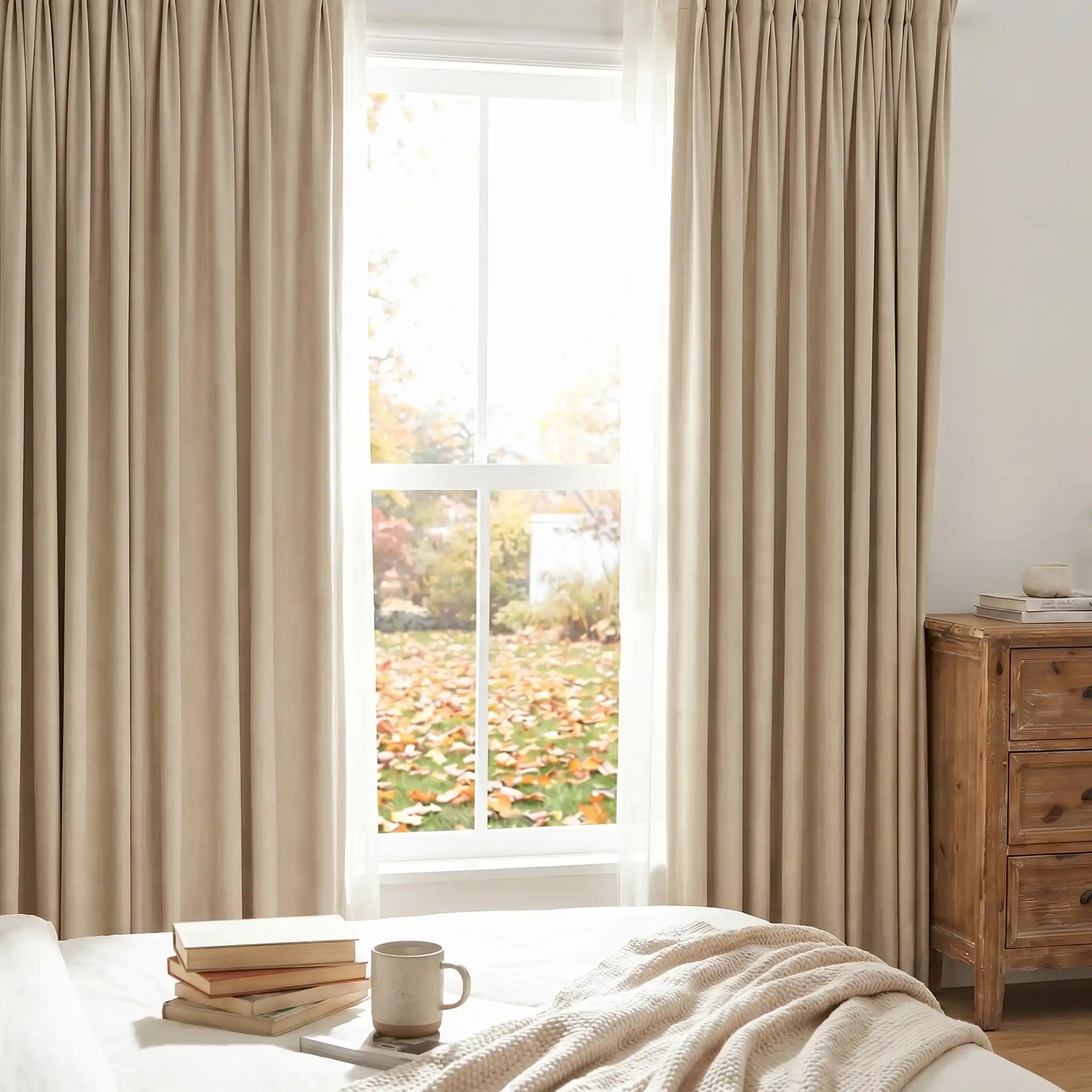
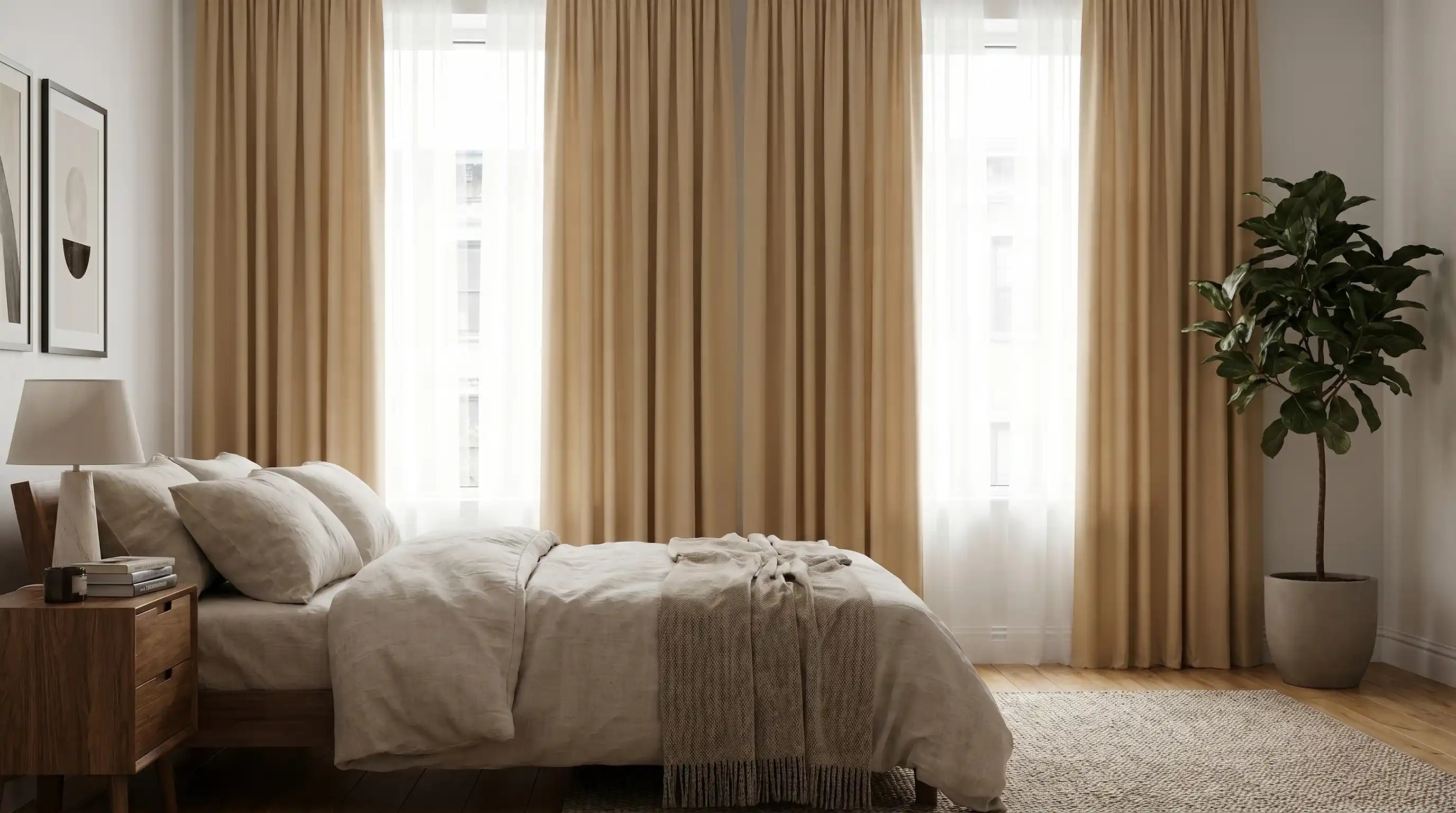
One of the most effective bedroom window treatments isn't a single curtain — it's two layers. A sheer or light-filtering panel underneath, paired with a heavier or blackout panel on top, gives you full flexibility: open both for maximum light, close the sheer for daytime privacy, close both for complete darkness at night.
This approach also adds visual depth and a sense of considered styling that a single panel rarely achieves. If you're working with custom curtains, you can spec both layers to fit your exact window dimensions and get the proportions exactly right.

The Proportion Detail Most People Miss
Even the right fabric in the right color can look slightly off if the proportions aren't correct. The rod sitting too low, panels that are too narrow for the window, or a hem that hovers above the floor — any of these will make the treatment look like it doesn't quite belong.
The fix is simple: hang high, go wide, and let the fabric reach the floor. These three adjustments alone will make almost any curtain look more intentional and more expensive than it is.
Final Thoughts
Bedroom curtain ideas are ultimately about creating a room that supports the way you actually live in it. That means prioritizing darkness and comfort first, then building the aesthetic around those needs. When you do it in that order, the result tends to feel both beautiful and genuinely useful — which is exactly what a bedroom should be.