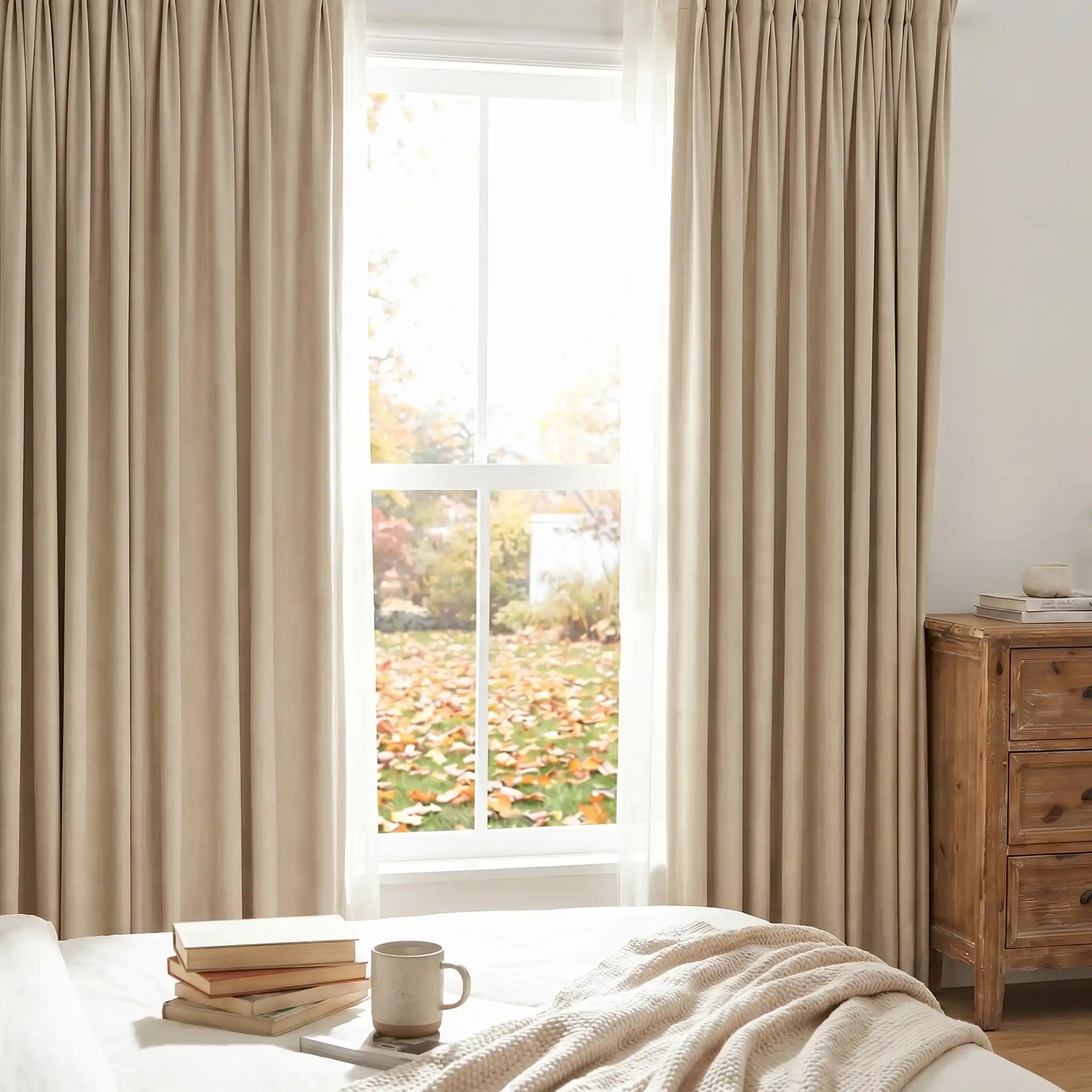

Your living room is where life happens — lazy Sunday mornings, movie nights, dinner parties, and everything in between. The curtains you choose set the tone for all of it. Get them right and the whole room feels pulled together. Get them wrong and even the most beautiful furniture can look off. So let’s talk about how to find the best curtains for living room spaces, from fabric and style to length and hanging height.

How to Choose Curtains for Living Room
Before you start browsing, it helps to get clear on what you actually need. How to choose curtains for living room spaces comes down to four key decisions: light control, privacy, fabric, and style. Here’s how to think through each one.
Light Control: Blackout, Sheer, or Both?
If your living room faces west and gets blasted with afternoon sun, the best blackout curtains will save your furniture from fading and make TV-watching actually enjoyable. If you love natural light and want the room to feel open and airy, best sheer curtains or light-filtering panels are the better call. Many living rooms benefit from both — sheer panels for daytime, blackout curtains drawn for movie nights or when the sun gets intense. This layered approach is one of the most popular living room curtain ideas among interior designers.
Privacy Needs
Ground-floor living rooms facing a street or neighbor’s window need best curtains for privacy that work both day and night. Blackout curtains are the most effective, but even a quality linen panel provides reasonable daytime privacy. Sheer curtains alone won’t cut it after dark.
How to Choose Curtain Fabric
Fabric choice dramatically affects how curtains look and perform. Here’s a quick breakdown of the most popular options for living rooms:
- Linen curtains for living room: The perennial favorite. Natural linen has a relaxed, textured quality that works in everything from farmhouse to contemporary spaces. It filters light beautifully and gets better with age. The best linen curtains are slightly heavier weight for better drape.
- Velvet: Rich, dramatic, and excellent at blocking light and sound. Best for formal living rooms or spaces where you want a cozy, enveloping feel.
- Sheer voile or chiffon: Lightweight and airy, ideal for layering or for rooms where you want to maximize natural light. Sheer curtains vs voile curtains — voile is slightly crisper, sheer is softer; both work well in living rooms.
- Polyester linen-look: The practical choice — machine washable, wrinkle-resistant, and available in a huge range of colors. Often indistinguishable from natural linen at a glance.

How to Choose Curtain Length
Curtain length is one of the most impactful — and most commonly mishandled — decisions in window dressing. Here’s the rule of thumb for how to choose curtain length in a living room:
- Floor-length (just grazing the floor): The most versatile and universally flattering option. Works in almost any living room.
- Puddle length (2–6 inches extra on the floor): Luxurious and dramatic, best for formal spaces or high-ceiling rooms.
- Sill length or apron length: Generally avoid in living rooms — it tends to look dated and can make ceilings feel lower.
How High Should Curtains Be Hung?
This is where most people go wrong. Hanging curtains too close to the window frame makes ceilings feel lower and windows look smaller. The standard advice: mount your rod 4–6 inches above the window frame. For maximum drama and the illusion of taller ceilings, hang the rod as close to the ceiling as possible — this is especially effective for best curtains for tall windows or rooms with standard 8-foot ceilings that you want to feel grander.
How Wide Should Curtains Be?
Your curtain panels should total 1.5–2.5x the width of your window when closed. This fullness is what gives curtains that lush, gathered look. Skimping on width is the fastest way to make expensive curtains look cheap. For best curtains for large windows, you may need three or four panels rather than the standard two.
How to Style Living Room Curtains
Once you’ve got the basics right, styling is where you can have fun. Some of the most effective living room curtain ideas:
- Layer sheer and blackout: Install a double rod and hang sheer panels behind heavier drapes. Pull the sheers closed during the day for soft light; draw the blackout panels at night for privacy and warmth.
- Go floor-to-ceiling: Even if your windows don’t reach the ceiling, hanging curtains from ceiling height creates a dramatic, high-end look.
- Use tiebacks: Tiebacks let you sculpt the curtain into an elegant swag during the day, letting in maximum light while adding visual interest.
- Match or contrast with walls: Curtains in the same tone as your walls create a seamless, sophisticated look. Bold contrast curtains make a statement.

Best Living Room Curtains by Window Type
Best Curtains for Large Windows
Large windows are a gift — don’t cover them with curtains that are too narrow or too short. The best curtains for large windows are floor-length, hung from ceiling height, and wide enough to stack well clear of the glass when open. Linen, velvet, and silk-fiber fabrics all drape beautifully at scale.
Best Curtains for Sliding Glass Doors
Sliding glass doors need curtains that stack neatly to one side without blocking the door. Grommet-top panels slide easily on the rod, while ripple fold curtains give a more contemporary, hotel-like look. The best curtains for sliding glass doors should be at least 2x the door width so they look full when closed.
Best Curtains for Bay Windows
Bay windows are beautiful but tricky. The best curtains for bay windows are typically hung on a curved or angled rod that follows the bay’s shape, with individual panels for each section. This preserves the architectural character of the bay while still giving you light control and privacy.
FAQ: Living Room Curtains
What are the best living room curtains overall?
The best living room curtains depend on your style and needs, but linen panels in a neutral tone are the most universally flattering starting point. Layer with blackout curtains if you need light control, or add sheer panels for a softer, more layered look.
How to choose living room curtains if I have high ceilings?
Hang your rod as close to the ceiling as possible and choose floor-length or puddle-length panels. This emphasizes the height rather than fighting it. Velvet or silk-fiber fabrics drape especially well in tall spaces.
Are linen curtains worth it for a living room?
Yes — linen curtains for living room spaces are one of the best investments you can make. They’re durable, get better with age, and have a natural texture that synthetic fabrics struggle to replicate. If budget is a concern, high-quality linen-look polyester is an excellent alternative.
Grommet curtains vs pinch pleat curtains — which is better for living rooms?
Grommet curtains vs pinch pleat curtains: grommets give a casual, contemporary look and slide easily on the rod. Pinch pleat curtains are more formal and tailored, with a classic elegance that suits traditional or transitional spaces. Both work well in living rooms — it’s purely a style preference.
What are the best window treatments for living room spaces?
The best window treatments for living room are typically curtains (for warmth and style), roman shades (for a clean, architectural look), or a combination of both. Zebra shades are also increasingly popular for living rooms where flexible light control is a priority.