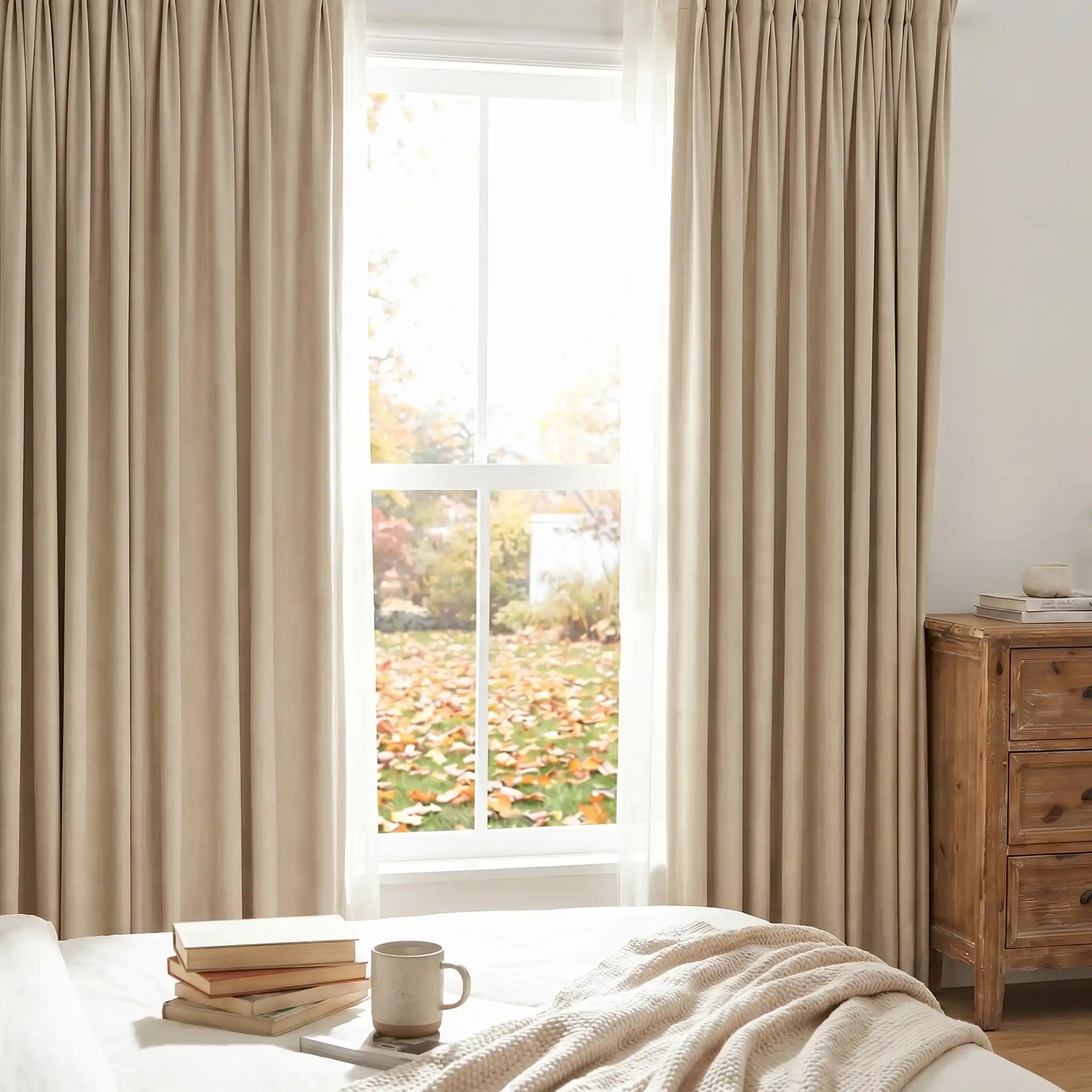

Choosing bedroom curtains used to be a simple style decision. Today, it is part of broader home planning. The weight of your curtains affects how much daylight enters the room, how private the space feels, how easy the curtains are to maintain, and even how comfortable the room feels across different seasons.
For modern homes, the choice is not always “lightweight curtains or heavy curtains.” In many cases, the best answer depends on your lighting conditions, lifestyle, climate, room size, and design goals. This guide compares both options clearly so you can choose what works best for your bedroom.
Start with Your Home’s Lighting Conditions
Before thinking about fabric, color, or curtain style, look at the light in your bedroom. Curtain weight has a direct impact on how daylight moves through the space.
Homes with Abundant Natural Light
If your bedroom gets plenty of sunlight, lightweight curtains can help keep the room bright without making it feel exposed. Sheer, semi-sheer, linen-blend, and light-filtering curtains soften direct sun while preserving an open atmosphere.
Lightweight curtains are especially useful when you want to:
- Maintain natural brightness during the day
- Reduce harsh glare without darkening the room
- Create a softer, more relaxed bedroom mood
- Keep the window area visually light and uncluttered
In bright rooms, heavy curtains can still be useful, but they may feel too strong if used as the only window treatment. A layered setup often works better.
Bedrooms with Limited Sunlight
For bedrooms that already feel dim, heavy curtains can make the room look smaller or darker than it needs to be. Thick fabrics absorb more light and may create a closed-in feeling, especially in compact rooms.
In lower-light bedrooms, lightweight curtains usually help create a better balance. They allow limited daylight to enter while adding softness and privacy.
Good choices include:
- White or ivory sheers
- Pale linen curtains
- Light-filtering cotton blends
- Neutral semi-sheer panels
If privacy or insulation is still needed, consider adding a second layer instead of relying only on thick drapes.
East-, West-, and South-Facing Windows
Window direction also matters. Different exposures create different lighting challenges.
| Window Direction | Light Pattern | Recommended Curtain Approach |
|---|---|---|
| East-facing | Strong morning light | Lightweight curtains plus optional blackout layer |
| West-facing | Intense afternoon sun | Semi-sheer or lined curtains for glare and heat control |
| South-facing | Long daylight exposure | Layered curtains for flexible light management |
| North-facing | Softer, indirect light | Lightweight curtains to preserve brightness |
Seasonal changes should also be considered. A curtain setup that works well in winter may feel too heavy in summer, while very light curtains may not provide enough insulation during colder months.
Choose Curtains Based on How You Use Your Bedroom
The best curtain choice is not only about the material. It is about how the bedroom functions in daily life. A sleep-only room has different needs from a bedroom that also works as a home office, reading corner, or children’s space.
Bedrooms Used Only for Sleeping
If the bedroom is mainly for sleep, privacy and light blocking become more important. Heavy curtains, lined curtains, or blackout drapes may be the better option, especially for light-sensitive sleepers.
They can help with:
- Blocking streetlights
- Reducing early morning sun
- Creating a darker sleep environment
- Adding a sense of calm and enclosure
However, a fully heavy curtain setup may make the room feel dark during the day. Pairing heavy curtains with lightweight sheers gives you more flexibility.
Multi-Functional Bedrooms
Many modern bedrooms are used for more than sleeping. They may serve as a workspace, dressing area, reading room, or quiet place to unwind.
In this case, lightweight curtains often perform better during the day because they:
- Allow natural light for working or reading
- Reduce screen glare without making the room dark
- Keep the atmosphere relaxed
- Make the room feel more adaptable
A layered curtain system is usually the most practical choice for multi-functional bedrooms. Use lightweight curtains during the day and heavier panels when privacy or darkness is needed.
Guest Bedrooms
Guest bedrooms should feel comfortable for different people with different preferences. Some guests may prefer a bright room in the morning, while others may want more darkness.
A balanced setup works best:
- Lightweight curtains for daytime softness
- Heavier drapes or blackout lining for sleep privacy
- Neutral colors that fit various design styles
- Easy-to-operate hardware
This gives guests more control without making the room complicated.
Children’s Bedrooms
Children’s bedrooms need practical, safe, and easy-care solutions. Curtain weight should be chosen with daily use in mind.
For children’s rooms, consider:
- Washable fabrics
- Secure curtain rods or tracks
- Cordless or child-safe operating systems
- Light control for naps and bedtime
- Durable materials that can handle frequent use
Heavy blackout curtains may help young children sleep, while lightweight curtains can keep the room bright and cheerful during the day. Again, layering is often the most useful approach.
How Curtain Weight Influences Interior Style
Curtains cover a big part of the wall, so fabric weight has a clear impact on how a bedroom feels. Light curtains usually make the room look brighter and more open. Heavier curtains bring more shape, texture, and a stronger sense of finish.
Creating an Open, Airy Appearance
Lightweight curtains suit bedrooms that rely on natural light and a clean layout. They are often used in minimalist, Scandinavian, coastal, and modern interiors because they do not make the window area feel heavy.
They can help create:
- A softer look around the window
- More natural light in the room
- A relaxed, breathable feeling
- A cleaner and less crowded layout
This works especially well in small bedrooms, apartments, or rooms where heavy fabric would feel too visually dominant.
Adding Visual Depth and Warmth
Heavy curtains give a bedroom more weight and presence. They add volume, texture, and a more enclosed feeling, which can make the space feel warmer and more finished.
They are useful when you want to:
- Make the bedroom feel cozier
- Add depth to plain walls
- Make a large room feel more intimate
- Support a classic, elegant, or luxury style
Velvet, thick cotton, jacquard, suede-like fabrics, and lined drapes can all create this effect. The main point is to keep the fabric in scale with the room, so the curtains do not feel bulky or overpowering.
Making Ceilings Look Higher
Both lightweight and heavy curtains can make the ceiling look higher when they are installed well. This depends more on curtain placement than on fabric weight.
For a taller visual effect:
- Mount the rod or track close to the ceiling
- Let the curtains reach the floor
- Use vertical folds or ripple-style headers
- Avoid short curtains that cut the wall visually
Lightweight floor-length curtains usually create a smooth, easy vertical line. Heavy curtains can do the same, but they need enough fullness and stronger hardware to hang properly.
Framing Large Windows Without Overpowering the Room
Large windows need the right balance. Lightweight curtains can soften the glass without blocking too much view or making the room feel closed in.
Heavy curtains can also frame large windows well, especially in rooms with high ceilings or enough floor space. They add privacy and a more dramatic look, but they need stronger rods or tracks and careful styling.
For large modern windows, layering is often the most balanced option: sheer curtains near the glass, with heavier drapes on the outside.
Which Curtain Option Requires Less Maintenance?
The Hidden Impact on Home Energy Efficiency
Curtains play a bigger role in bedroom comfort than many people think. They will not replace insulation, but they can help manage heat around windows, especially in rooms that get strong sun or feel cold at night.
Managing Indoor Heat During Summer
During summer, curtains can cut down the amount of direct sunlight entering the room. This is especially helpful for west-facing and south-facing bedrooms, where afternoon heat can build up quickly.
Heavy or lined curtains block more heat, but they also make the room darker. Lightweight curtains are better if you want to reduce glare while still keeping the bedroom bright. They just do not provide the same level of thermal control.
A useful summer setup may include:
- Light-filtering sheers for daytime brightness
- Lined curtains for strong afternoon sun
- Pale colors that reflect more light
- Wide panels that cover the whole window area
Retaining Warmth During Winter
In winter, heavier curtains usually perform better. Thick fabric and lining can create a warmer layer near the window, helping reduce drafts and heat loss.
They are especially useful for:
- Older homes
- Large windows
- Bedrooms in colder climates
- Rooms with single-pane or poorly insulated windows
Lightweight curtains on their own offer only modest insulation. If keeping the bedroom warm is important, use them with lined drapes or thermal curtains.
Reducing Dependence on Air Conditioning and Heating
Curtains can support heating and cooling when they are used at the right time. Closing them before the sun gets too strong can help keep heat out. Closing heavier curtains at night can help keep warmth in.
For better results:
- Close curtains before direct sunlight becomes intense
- Use heavier layers during cold nights
- Keep lightweight curtains open when winter sun is useful
- Make sure the curtain width fully covers the window
The goal is not to block all airflow or seal the room completely. It is simply to help the bedroom hold a steadier temperature.
Finding the Right Balance Between Comfort and Energy Savings
For many homes, the best setup uses both light and heavy curtain fabrics. Lightweight curtains keep the room bright during the day. Heavier curtains add insulation when the weather calls for it.
This is especially practical in areas with both hot summers and cold winters. You can adjust the layers through the year without replacing the entire window treatment.
Common Homeowner Scenarios and the Best Curtain Choice
Different homes have different curtain needs. Here is a practical comparison based on common living situations.
| Home Scenario | Best Curtain Choice | Why It Works |
|---|---|---|
| Small urban apartment | Lightweight or layered curtains | Keeps the room bright and visually open |
| Large modern villa | Layered curtains with heavier outer panels | Balances large windows, privacy, and style |
| Rental property | Lightweight washable curtains | Easy to install, remove, and maintain |
| Vacation home | Durable layered curtains | Handles changing seasons and occasional use |
| Smart home | Lightweight curtains or layered automated tracks | Easier movement and better control |
For Small Urban Apartments
Small apartments often benefit from lightweight curtains because they do not visually crowd the room. Pale colors and ceiling-to-floor installation can make the bedroom feel taller and brighter.
If privacy is a concern, choose semi-sheer curtains rather than very transparent sheers.
For Large Modern Villas
Large homes with tall windows can handle heavier curtains more easily. In villas, heavy drapes can add proportion, warmth, and architectural presence.
A layered system is often ideal: sheers for daytime and heavier drapes for evening privacy.
For Rental Properties
Rental homes need flexibility. Lightweight curtains are easier to install with standard rods, tension rods, or removable hardware.
Good rental curtain choices include:
- Grommet curtains
- Rod pocket panels
- Machine-washable fabrics
- Neutral colors
- Lightweight semi-sheer materials
These options are practical and easy to move when needed.
For Vacation Homes
Vacation homes may need curtains that handle irregular use, changing humidity, and different seasons. Durability matters.
A good approach is to use easy-care lightweight curtains with a heavier layer for privacy and temperature control. Avoid very delicate fabrics if the home is not maintained frequently.
For Smart Homes with Automated Curtains
Smart curtain systems work best when curtain weight is matched to the motor and track. Lightweight curtains are easier to automate and place less stress on the system.
For smart homes, consider:
- Lightweight sheers for daily automation
- Separate tracks for blackout curtains
- Smooth ripple fold headers
- Fabric weight recommended by the motor manufacturer
This helps the system operate more quietly and reliably.
Should You Choose One Type or Combine Both?
For a modern bedroom, using light and heavy curtains together is often more practical than choosing one style alone. The lighter layer keeps the room bright and comfortable during the day, while the heavier layer gives you privacy, darkness, and a more settled feeling when needed.
Benefits of Layering Curtains
Layered curtains make the bedroom more flexible. You can keep the sheer layer closed in the daytime to soften sunlight, then draw the heavier curtains in the evening for a quieter and more private space.
This arrangement offers several advantages:
- Better privacy at different times of day
- More control over sunlight and glare
- Extra comfort near windows in hot or cold weather
- A fuller, more finished window design
- Easier adjustment as seasons change
It is a useful choice for bedrooms that also function as reading areas, work corners, or relaxing spaces during the day.
Mixing Sheer and Heavy Panels
One of the easiest ways to layer curtains is to place sheer curtains near the window and heavier panels in front. This keeps the bedroom light in the daytime and gives the window more depth when the outer curtains are closed.
The sheer layer helps by:
- Softening strong daylight
- Reducing glare on screens or furniture
- Giving some privacy while keeping light
- Making the room feel more open
The heavier layer helps by:
- Blocking outside views at night
- Making the room darker for sleep
- Adding warmth during cooler months
- Giving the window a stronger frame
For a clean look, choose tones that sit well together. For example, white sheers with warm beige panels, ivory sheers with taupe drapes, or pale gray sheers with deep gray curtains.
Flexible Light Control Throughout the Day
A layered curtain system works because bedroom needs change across the day. The room may need brightness in the morning, glare control in the afternoon, and privacy at night.
| Time of Day | How to Use the Curtains | Result |
|---|---|---|
| Morning | Open the heavy panels and keep sheers closed | Bright light without harsh glare |
| Afternoon | Use sheers or semi-sheers | Softer sunlight and less glare |
| Evening | Close the heavier curtains | More privacy |
| Night | Close the lined or blackout layer | Darker, more restful sleep setting |
This setup is especially helpful for bedrooms facing nearby buildings, busy streets, or strong afternoon sun.
Design Tips for a Modern Bedroom
To keep layered curtains from looking too heavy, keep the styling simple. Modern bedrooms usually look better with clean lines, quiet colors, and smooth fabric movement.
Helpful tips include:
- Choose plain colors or subtle textures
- Avoid busy patterns and ornate trims
- Install rods or tracks close to the ceiling
- Let the curtains fall to the floor
- Use simple headings such as ripple fold, pleat, or grommet
- Allow enough fabric width for soft, natural folds
When the layers are chosen and installed well, the result feels calm, polished, and easy to use every day.
Buying Checklist Before Making Your Decision
Before choosing bedroom curtains, it is worth checking a few practical points first. Many curtain problems come from small details: panels that hang too short, fabric that blocks more light than expected, or rods that are not strong enough for the curtain weight.
Bedroom Curtain Buying Checklist
Use this checklist before placing an order or visiting a store.
Measure the Window Carefully
Start with accurate width and height measurements. Do not measure only the glass. Include the full area you want the curtains to cover.
For a fuller appearance, curtain panels should usually be wider than the window itself. This helps the fabric form natural folds instead of looking flat or stretched.
Think About Your Local Climate
Climate can affect which curtain weight works best.
In hot areas, curtains may need to reduce glare and limit heat from direct sunlight. In colder areas, heavier or lined curtains can help the bedroom feel warmer, especially near large or older windows.
Check Your Privacy Needs
Not every bedroom needs the