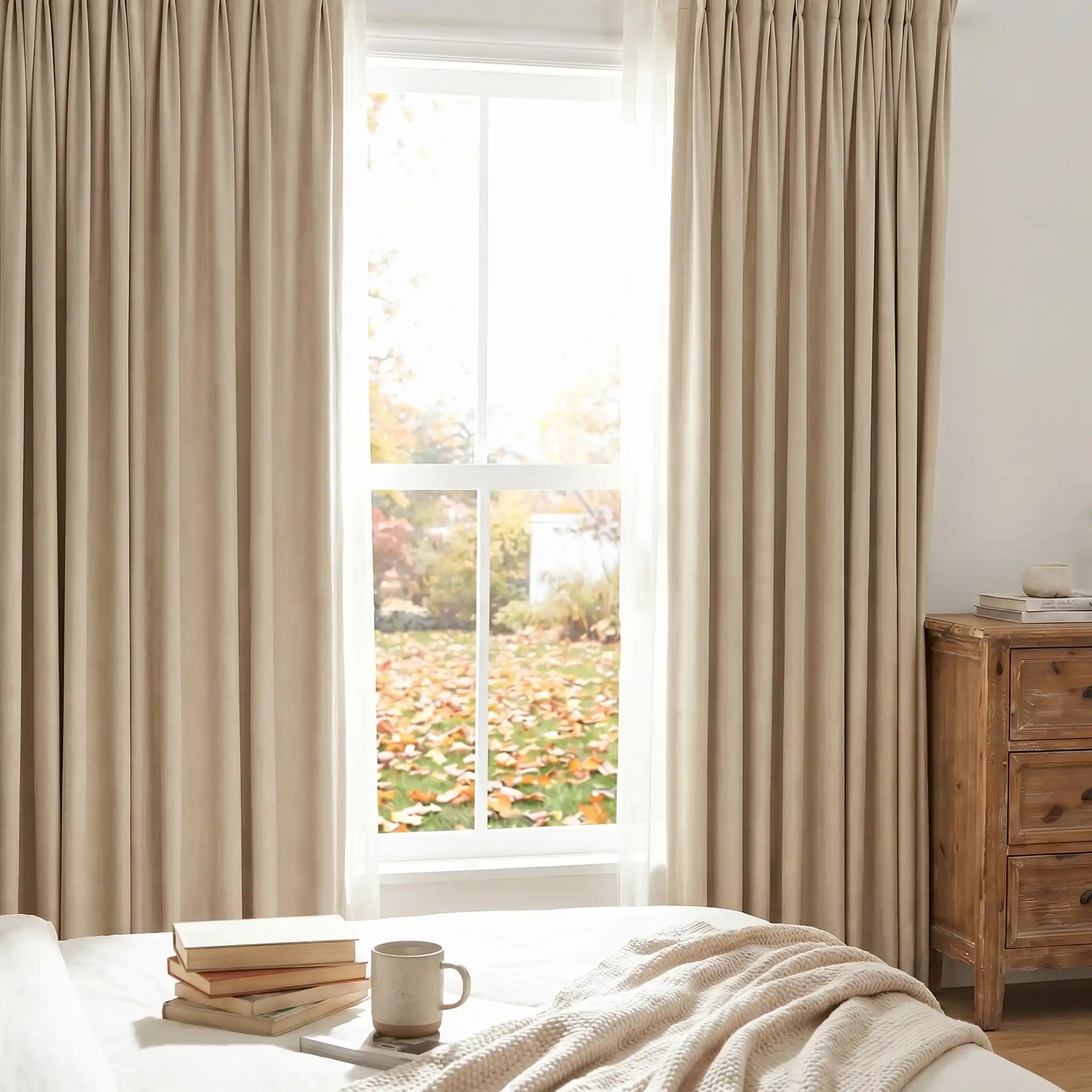
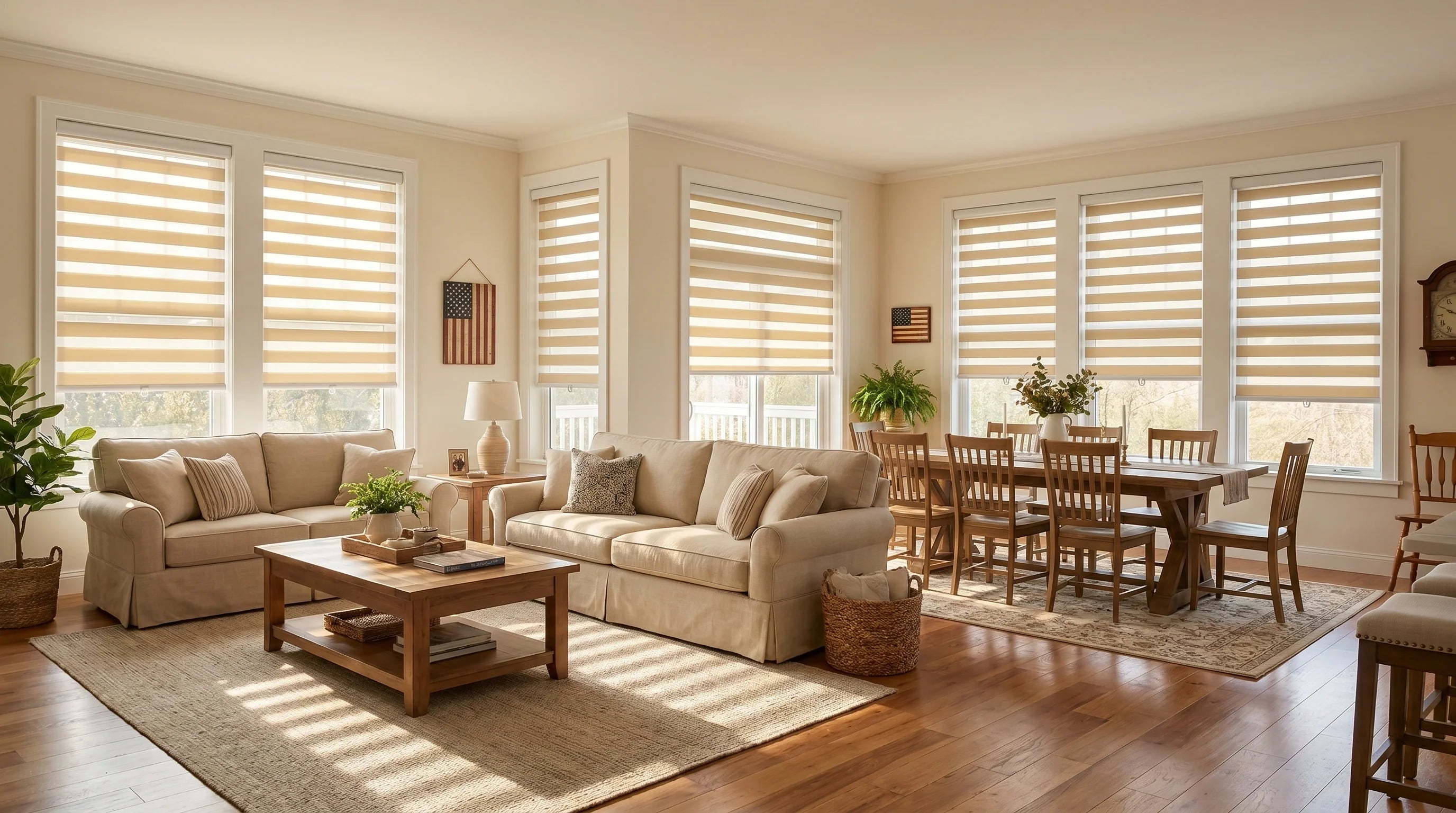
A lot of people choose shades or curtains by category name alone, then wonder why the final result feels slightly off. The label matters far less than the way the treatment handles light, scale, privacy, and movement. That is the right starting point for zebra shades vs roman shades.
Instead of asking what is most popular, ask what will still feel right six months after installation. A room that works beautifully day and night will always age better than one that was styled for the first impression alone.
How Each Style Controls Light
The real question behind this topic is how each style controls light. Once that is clear, many of the usual shopping distractions fall away. Features that sound equally appealing on a product page suddenly show their strengths and weaknesses much more honestly.
Zebra shades work by alternating sheer and solid bands that you align or offset to dial in exactly how much light enters. Roman shades, by contrast, stack into neat horizontal folds when raised, giving you a clean all-or-nothing choice between full coverage and a fully open window.
If you want that adjustable, in-between light quality, the Hillary Blackout Zebra Shade Cordless and the Kace Blackout Zebra Shade Cordless are both strong starting points — cordless operation keeps the look clean and the daily routine simple.

The Look Each Option Brings to a Room
Start here: the look each option brings to a room. This is the point that usually determines whether the final result feels obvious in a good way or slightly compromised. In a bright room, for example, the best-looking treatment often ends up being the one that manages daylight calmly instead of fighting it.
This is also where material and construction matter. Roman shades tend to work best when the goal is a softer, more natural finish — especially in linen or textured fabrics. Zebra shades earn their place when coverage, structure, or ease of use matter more than visual lightness alone.
For a roman shade that brings warmth and texture, the Seraphina Custom Linen Roman Shades and Beatrice Custom Linen Roman Shades are both made to order in linen — a material that softens naturally with light and age.

Which Homes Benefit Most from Each
Start here: which homes benefit most from each. This is the point that usually determines whether the final result feels obvious in a good way or slightly compromised.
Cordless zebra shades suit homes with children or pets, high-traffic rooms, and spaces where you want precise light control without fuss. Roman shades suit rooms where the window is a design focal point and a more tailored, fabric-forward look is the priority.

A Practical Takeaway
It also helps to picture the room on an ordinary weekday instead of in a styled photo. Will the window be opened often? Is there furniture nearby? Does the space need blackout at night but softness during the day? Those questions usually lead to better decisions than trend lists do.
Conclusion
In the end, zebra shades vs roman shades is less about finding a universally perfect answer and more about choosing the option that makes the room feel easier to live in. When light, scale, and function all line up, the style almost takes care of itself.