
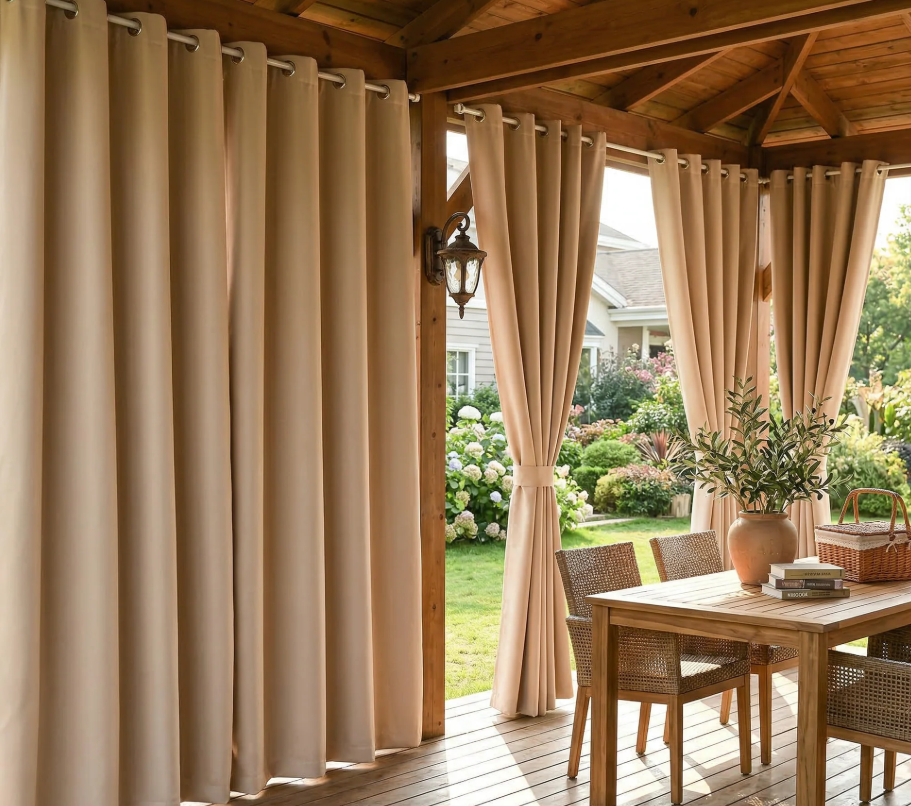
Outdoor Waterproof Blackout Curtains: The Complete Buying Guide for Privacy, Weather Protection, and Comfort
Outdoor living spaces have become an important part of modern homes. Patios, balconies, decks, pergolas, and garden seating areas are no longer used only on special occasions. Many homeowners now treat them as extensions of the living room, dining room, or even home office.
As outdoor spaces become more functional, people are also looking for better ways to make them private, shaded, and comfortable. This is where outdoor waterproof blackout curtains come in. They help block sunlight, reduce heat, protect against light rain, and create a more enclosed and relaxing outdoor environment.
This guide explains what outdoor waterproof blackout curtains are, how they work, where they can be used, what materials to choose, and how to maintain them properly.
What Are Outdoor Waterproof Blackout Curtains?
Outdoor waterproof blackout curtains are specially designed curtains made for exterior use. Unlike indoor curtains, they are built to handle sunlight, moisture, wind, and changing weather conditions.
They usually combine three main functions:
- Privacy protection
- Light blocking
- Waterproof or water-resistant performance
These curtains are commonly used on patios, balconies, pergolas, gazebos, and other outdoor areas where people want more comfort and control over the environment.
Definition and Key Features
Outdoor waterproof blackout curtains are typically made from durable synthetic fabrics with special coatings or layered construction. Their key features often include:
- Thick or multi-layer fabric
- Waterproof or water-repellent surface
- UV-resistant treatment
- Blackout or room-darkening capability
- Rust-resistant grommets or reinforced hanging points
- Mold and mildew resistance
- Easy cleaning and maintenance
The exact performance depends on the fabric, coating, stitching, and installation method.

How They Differ from Regular Outdoor Curtains
Regular outdoor curtains are often designed mainly for decoration or light shade. They may offer some privacy and sun protection, but they do not always block strong sunlight or rain effectively.
Outdoor waterproof blackout curtains are usually heavier and denser. They are designed to provide stronger coverage and better protection.
| Feature | Regular Outdoor Curtains | Outdoor Waterproof Blackout Curtains |
|---|---|---|
| Privacy | Moderate | High |
| Light Blocking | Light to medium | Medium to high |
| Waterproof Performance | Limited | Better protection |
| Fabric Weight | Lightweight | Medium to heavy |
| Best Use | Decoration, soft shade | Privacy, heat control, weather protection |
Regular outdoor curtains can work well in mild climates or covered spaces. Waterproof blackout curtains are better when you need stronger function and longer outdoor use.
Waterproof vs Water-Resistant Fabrics
The terms waterproof and water-resistant are often used together, but they are not exactly the same.
- Water-resistant fabric can repel light rain or splashes for a short time.
- Waterproof fabric provides stronger protection and can prevent water from passing through the material under normal outdoor conditions.
However, even waterproof curtains are not designed to replace solid walls or storm barriers. Heavy rain, strong wind, or long exposure to standing water can still affect performance over time.
Benefits of Outdoor Waterproof Blackout Curtains
Outdoor waterproof blackout curtains are useful because they solve several common outdoor comfort problems at the same time. They are especially helpful in areas exposed to strong sun, nearby neighbors, street views, or unpredictable weather.
Enhance Privacy in Outdoor Spaces
Privacy is one of the main reasons people choose outdoor curtains. A patio or balcony may feel open and exposed, especially in urban neighborhoods or apartment buildings.
Blackout outdoor curtains create a visual barrier between your space and the outside. They are useful for:
- Apartment balconies
- Backyard patios
- Poolside seating areas
- Outdoor dining spaces
- Hot tub areas
- Commercial terraces
They allow you to enjoy the outdoors without feeling like you are on display.
Block Sunlight and UV Rays
Strong sunlight can make outdoor areas uncomfortable, especially during summer afternoons. Blackout curtains reduce glare and help shade the space.
Many outdoor blackout curtains also offer some level of UV protection. This helps reduce direct exposure to sunlight and can make seating areas more usable throughout the day.
Reduce Heat and Improve Comfort
By blocking direct sunlight, outdoor waterproof blackout curtains can help reduce heat buildup in covered areas. They may not cool the space like an air conditioner, but they can make the environment feel noticeably more comfortable.
This is especially useful for:
- West-facing patios
- Sunny decks
- Outdoor dining areas
- Pergolas with partial shade
- Balconies exposed to afternoon sun
When combined with ventilation, ceiling fans, or shade structures, blackout curtains can make outdoor spaces much more enjoyable.
Protect Outdoor Furniture
Sunlight and moisture can damage outdoor furniture over time. UV rays may fade cushions, wood, plastic, and fabric. Rain and humidity can also contribute to mold, stains, and material wear.
Outdoor waterproof blackout curtains help create an extra layer of protection for:
- Patio sofas
- Outdoor cushions
- Dining sets
- Rugs
- Wooden furniture
- Decorative items
They do not replace proper furniture covers, but they can reduce direct exposure.
Create a Stylish Outdoor Environment
Besides practical benefits, outdoor curtains also improve the look of a space. They can make a patio feel softer, more private, and more finished.
Popular design choices include:
- Neutral beige or gray curtains for modern spaces
- White or cream curtains for coastal styles
- Dark colors for stronger blackout performance
- Earth tones for garden settings
- Textured fabrics for a more premium look
The right curtains can make an outdoor area feel more like a real room.
Where Can Outdoor Blackout Curtains Be Used?
Outdoor waterproof blackout curtains are flexible and can be installed in many types of spaces. The key is to choose the right fabric, size, and hardware for the location.
Patio and Deck Areas
Patios and decks are among the most common places to use outdoor curtains. Curtains can be installed around the perimeter to create shade, privacy, and wind protection.
They are especially useful for patios facing neighbors, streets, or strong sunlight.
Pergolas and Gazebos
Pergolas and gazebos often have open sides. Adding waterproof blackout curtains makes them more comfortable and usable in different weather conditions.
Curtains can be drawn during hot afternoons or light rain, then opened when more airflow is needed.
Balconies and Apartment Terraces
For apartment living, privacy can be limited. Outdoor blackout curtains help create a more personal balcony space.
They are useful for:
- Blocking views from nearby buildings
- Reducing street light at night
- Creating shade in small outdoor spaces
- Making terraces feel more comfortable
Before installation, apartment residents should check building rules or balcony restrictions.
Outdoor Dining Areas
Outdoor dining spaces benefit from shade and wind control. Curtains help make meals more comfortable by reducing glare and creating a more intimate setting.
For restaurants and cafés, curtains can also help divide outdoor seating areas and improve guest comfort.
Poolside Cabanas
Poolside areas often require both privacy and sun protection. Waterproof blackout curtains are suitable for cabanas, changing areas, and lounge spaces.
They also help protect cushions and seating from sun exposure when the space is not in use.
Commercial Outdoor Spaces
Businesses use outdoor waterproof blackout curtains for both function and appearance. Common commercial uses include:
- Restaurant patios
- Hotel terraces
- Resort cabanas
- Outdoor event spaces
- Cafés
- Clubhouses
For commercial use, heavier fabrics and more durable hardware are usually recommended.
How Waterproof Blackout Curtains Work
Outdoor waterproof blackout curtains work through a combination of fabric density, coating, and construction. The better the design, the more effective the curtain will be at blocking light, shedding water, and resisting outdoor wear.
Multi-Layer Fabric Construction
Many blackout curtains use multiple layers of fabric. A typical structure may include:
- A decorative front layer
- A blackout middle layer
- A waterproof or coated backing layer
This layered design improves light control and helps prevent moisture from passing through the curtain.
Waterproof Coating Technology
Waterproof curtains often use coatings such as PU, PVC, or other water-repellent finishes. These coatings help water bead on the surface instead of soaking into the fabric.
The coating quality matters. A poor coating may peel, crack, or lose effectiveness after long exposure to sun and rain.
Blackout Performance Explained
Blackout performance depends on fabric color, thickness, weave density, and backing material.
In general:
- Darker colors block more light
- Thicker fabrics provide better coverage
- Coated backing improves blackout performance
- Tighter weaves reduce light penetration
Some outdoor curtains are fully blackout, while others are room-darkening. Always check product specifications if light blocking is a priority.
Wind and Weather Resistance
Outdoor curtains must be able to handle movement from wind. Heavy fabric helps, but installation also matters.
Wind-resistant setups may include:
- Bottom weights
- Tiebacks
- Side hooks
- Cable systems
- Curtain clips
- Stainless steel hardware
In very strong winds or storms, curtains should be tied back or removed to prevent damage.
Fabric Materials for Outdoor Waterproof Blackout Curtains
Choosing the right fabric is one of the most important decisions. Different materials offer different levels of durability, waterproofing, UV resistance, and appearance.
Polyester Outdoor Curtains
Polyester is widely used for outdoor curtains because it is affordable, lightweight, and easy to maintain. With proper coating, polyester can offer good water resistance and UV protection.
It is a practical choice for home patios, balconies, and light commercial use.
Oxford Fabric Curtains
Oxford fabric is a woven material known for strength and durability. It is often used for outdoor covers, bags, tents, and heavy-duty fabric products.
For outdoor waterproof blackout curtains, Oxford fabric can be a good option when you need stronger tear resistance and weather protection.
PVC-Coated Waterproof Curtains
PVC-coated curtains offer strong waterproof performance. They are often thicker and more rigid than standard fabric curtains.
They are suitable for spaces that need high moisture protection, but they may feel less soft or decorative compared with woven outdoor fabrics.
Solution-Dyed Outdoor Fabrics
Solution-dyed fabrics are made by adding color during the fiber production process, rather than dyeing the surface later. This improves colorfastness and UV resistance.
These fabrics are often more expensive, but they perform well in sunny climates and long-term outdoor use.
Heavy-Duty Commercial Outdoor Fabrics
Commercial-grade fabrics are designed for frequent use and tougher conditions. They are suitable for hotels, restaurants, resorts, and outdoor business spaces.
They usually offer:
- Stronger tear resistance
- Better UV stability
- Higher waterproof performance
- Longer service life
- More stable color retention
For commercial projects, investing in better fabric often reduces replacement costs over time.
How to Choose the Best Outdoor Waterproof Blackout Curtains
The best curtain is not always the thickest or most expensive one. It depends on your space, climate, privacy needs, and installation conditions.
Measure Your Outdoor Space Correctly
Accurate measurement is essential. Curtains that are too short or too narrow will not provide enough coverage.
Measure:
- Width of the opening
- Height from rod to floor or desired bottom point
- Number of curtain panels needed
- Extra width for folds and fullness
A common rule is to choose curtain panels that are 1.5 to 2 times the width of the area for a fuller look and better coverage.
Select the Right Fabric Weight
Fabric weight affects appearance and performance.
- Lightweight curtains are easier to move and better for mild weather.
- Medium-weight curtains offer a good balance of privacy and usability.
- Heavy-duty curtains provide better blackout, durability, and wind resistance.
For exposed outdoor spaces, medium to heavy fabrics are usually more reliable.
Choose the Appropriate Waterproof Rating
If the curtains are used under a roof or pergola, water-resistant fabric may be enough. If they are more exposed to rain, choose stronger waterproof materials or coated fabrics.
Also check whether the seams and stitching are designed to reduce water penetration.
Consider UV Resistance
UV resistance is important in sunny areas. Without UV protection, curtains may fade, weaken, or become brittle over time.
Look for curtains that mention:
- UV-resistant fabric
- Fade-resistant color
- Outdoor-grade coating
- Solution-dyed material
This is especially important for darker curtains, which may show fading more clearly.
Evaluate Blackout Performance Levels
Not all blackout curtains block the same amount of light. Some reduce glare, while others create strong shade.
For maximum blackout performance, look for:
- Dense fabric
- Dark color
- Blackout backing
- Multi-layer construction
- Minimal gaps during installation
If privacy is the main concern, blackout performance is usually more important than decorative softness.
Pick the Right Color and Style
Color affects both appearance and performance.
- Light colors look airy and reflect heat better, but may block less light.
- Dark colors provide stronger blackout performance but may absorb more heat.
- Neutral colors are versatile and work with most outdoor designs.
- Patterned curtains add personality but may be harder to match.
Choose a style that fits your outdoor furniture, flooring, and overall design.
Outdoor Waterproof Blackout Curtains vs Outdoor Sheer Curtains
Outdoor blackout curtains and sheer curtains serve different purposes. Both can be useful, but they are not interchangeable.
Privacy Comparison
Blackout curtains offer much stronger privacy. They block direct views and create a more enclosed space.
Sheer curtains provide soft visual filtering but still allow some visibility, especially at night when lights are on.
Weather Protection Comparison
Waterproof blackout curtains provide better protection against light rain, wind, and sun exposure.
Sheer curtains are usually more decorative and offer limited weather protection.
Light Control Comparison
Blackout curtains block or greatly reduce sunlight. Sheer curtains soften light but do not create full shade.
For hot, sunny areas, blackout curtains are usually more practical.
Maintenance Requirements
Sheer curtains are lighter and easier to wash, but they may snag or tear more easily.
Blackout curtains are heavier and may require more careful cleaning, especially if they have waterproof coatings.
Best Use Cases for Each
| Curtain Type | Best For | Main Advantage |
|---|---|---|
| Outdoor Blackout Curtains | Privacy, shade, weather protection | Strong functional coverage |
| Outdoor Sheer Curtains | Decoration, soft light, airflow | Light and elegant appearance |
| Combined Use | Layered outdoor spaces | Flexible privacy and style |
For many homes, a combination of sheer and blackout curtains can offer the best balance.
Popular Outdoor Curtain Styles and Designs
Outdoor waterproof blackout curtains come in different hanging styles. The best choice depends on your curtain rod, desired look, and how often you open and close the curtains.
Grommet Top Outdoor Curtains
Grommet top curtains are very common. Metal rings are built into the top of the curtain, allowing the panels to slide easily on a rod.
They are practical, modern, and easy to install.
Tab Top Outdoor Curtains
Tab top curtains have fabric loops at the top. They create a softer, more relaxed look.
They are best for decorative outdoor areas where the curtains do not need to be opened and closed frequently.
Rod Pocket Outdoor Curtains
Rod pocket curtains have a sewn pocket that slides over the rod. They create a clean look but may be harder to move smoothly.
They work well for fixed or semi-fixed installations.
Modern Minimalist Outdoor Curtains
Modern outdoor curtains often use simple colors, clean lines, and matte hardware. Gray, beige, white, and charcoal are common choices.
This style works well with metal furniture, concrete patios, and contemporary outdoor spaces.
Coastal and Resort-Inspired Designs
For a relaxed vacation feel, many people choose white, cream, blue, sand, or striped designs.
These curtains work well around pools, cabanas, beach houses, and garden lounges.
Installation Tips for Outdoor Waterproof Curtains
Good installation improves both appearance and performance. Even high-quality curtains may not work well if the rod, hardware, or fixing method is weak.
Choosing Outdoor Curtain Rods
Outdoor curtain rods should be strong enough to support the fabric weight. For waterproof blackout curtains, avoid weak indoor rods.
Good options include:
- Stainless steel rods
- Powder-coated aluminum rods
- Heavy-duty outdoor curtain rods
- Cable systems for wide openings
Make sure the rod diameter fits the curtain grommets or hanging style.
Using Stainless Steel Hardware
Outdoor hardware should resist rust and corrosion. Stainless steel is a good choice, especially in humid or coastal environments.
Use outdoor-grade:
- Screws
- Brackets
- Hooks
- Clips
- Tieback anchors
- Cable fittings
Rusty hardware can stain the fabric and weaken the installation.
Securing Curtains in Windy Conditions
Wind is one of the biggest challenges for outdoor curtains. To reduce movement, use:
- Weighted hems
- Bottom rods
- Side tiebacks
- Magnetic clips
- Ground anchors
- Rope or cable guides
For open areas, avoid leaving curtains loose during strong wind.
Common Installation Mistakes to Avoid
Common mistakes include:
- Using indoor curtain rods outdoors
- Choosing curtains that are too short
- Not allowing enough fabric width
- Ignoring wind conditions
- Installing hardware into weak surfaces
- Leaving large gaps that reduce privacy and blackout performance
A careful installation makes the curtains safer and more effective.
How to Clean and Maintain Outdoor Waterproof Blackout Curtains
Outdoor curtains are exposed to dust, pollen, rain, insects, and humidity. Regular cleaning helps maintain appearance and performance.
Routine Cleaning Tips
For everyday maintenance:
- Shake off loose dirt
- Use a soft brush or cloth
- Rinse with clean water when needed
- Wipe coated surfaces gently
- Let curtains dry fully before closing or storing
Avoid harsh scrubbing, which may damage waterproof coatings.
Removing Mold and Mildew
Mold and mildew can appear in damp areas, especially if curtains stay wet for long periods.
To clean mildew:
- Brush off loose dirt outside.
- Use mild soap and warm water.
- Gently scrub the affected area.
- Rinse thoroughly.
- Dry completely in open air.
Avoid bleach unless the fabric care label allows it. Bleach may weaken fabric or damage color.
Washing Instructions
Always follow the manufacturer’s care label. Some curtains are machine washable, while others should only be hand washed or wiped clean.
General advice:
- Use mild detergent
- Wash with cold or lukewarm water
- Avoid fabric softener
- Do not use high heat drying
- Air dry whenever possible
Heat can damage coatings and reduce waterproof performance.
Seasonal Storage Recommendations
If you live in an area with harsh winters, heavy storms, or long rainy seasons, seasonal storage may extend curtain life.
Before storage:
- Clean the curtains
- Dry them completely
- Fold loosely
- Store in a dry, ventilated place
- Avoid plastic bags that trap moisture
Proper storage helps prevent mold, odors, and fabric damage.
Common Problems and Solutions
Even good outdoor curtains can have issues if they are exposed to tough weather or installed incorrectly. Most problems can be managed with simple adjustments.
Curtains Blowing in the Wind
If curtains move too much, use bottom weights, tiebacks, side hooks, or cable guides. In strong storms, tie them securely or remove them temporarily.
Water Pooling on the Fabric
Water pooling can happen if curtains are folded, sagging, or installed at an angle where water collects.
To prevent this:
- Keep curtains hanging straight
- Avoid bunching during rain
- Shake off water after heavy rainfall
- Choose fabric with a good water-repellent finish
Fading Colors Over Time
Sun exposure can fade fabric, especially low-quality dyed materials.
To reduce fading:
- Choose UV-resistant fabric
- Use solution-dyed materials when possible
- Rotate panels if one side gets more sun
- Store curtains during long periods of non-use
Mold and Moisture Issues
Mold usually forms when curtains stay damp for too long.
To prevent it:
- Improve airflow
- Let curtains dry fully
- Clean regularly
- Avoid storing damp curtains
- Use mildew-resistant outdoor fabrics
Frequently Asked Questions About Outdoor Waterproof Blackout Curtains
Are outdoor blackout curtains truly waterproof?
Some are waterproof, while others are only water-resistant. Waterproof curtains have coatings or fabric treatments that help prevent water from passing through. However, they are not designed to act like permanent walls during heavy storms.
Can outdoor blackout curtains stay outside year-round?
In mild climates, many outdoor blackout curtains can stay outside most of the year. In areas with snow, hurricanes, heavy rain, or strong wind, it is better to remove and store them during extreme weather.
Do outdoor blackout curtains reduce heat?
Yes, they can reduce heat by blocking direct sunlight and creating shade. The effect depends on fabric thickness, color, installation, and airflow. They work best when used with a covered structure or ventilated outdoor area.
What is the best fabric for outdoor blackout curtains?
For residential use, coated polyester or Oxford fabric is often a practical choice. For sunny or commercial spaces, solution-dyed fabrics or heavy-duty outdoor fabrics usually offer better long-term durability.
How long do outdoor waterproof curtains last?
With proper care, good outdoor curtains may last several seasons. Their lifespan depends on fabric quality, sun exposure, rain, wind, cleaning habits, and storage conditions.
Are outdoor blackout curtains worth buying?
They are worth considering if you need privacy, shade, heat reduction, or light weather protection. They are especially useful for patios, balconies, pergolas, gazebos, and poolside areas.
Outdoor waterproof blackout curtains are a practical way to make outdoor spaces more private, shaded, and comfortable. They are especially useful for homes and businesses that want to create a more usable outdoor area without building permanent walls.
Key Factors to Consider Before Buying
Before choosing curtains, consider:
- Size of the outdoor space
- Amount of sunlight exposure
- Privacy needs
- Local weather conditions
- Fabric weight and waterproof level
- UV resistance
- Hardware quality
- Cleaning and storage requirements
The right choice depends on how and where the curtains will be used.
How to Select the Right Outdoor Waterproof Blackout Curtains for Your Space
For a small balcony, lightweight or medium-weight waterproof blackout curtains may be enough. For a large patio, pergola, or commercial terrace, heavier fabrics and stronger hardware are usually better.
If your space gets strong afternoon sun, choose curtains with better UV resistance and blackout performance. If rain is the main concern, focus on waterproof coating, seam quality, and fast-drying fabric.
Creating a Comfortable and Stylish Outdoor Living Area
A well-designed outdoor space should feel comfortable, useful, and easy to maintain. Outdoor waterproof blackout curtains can help create that balance. They provide privacy when needed, shade during hot days, and protection for furniture and guests.
When chosen carefully and installed properly, they can turn an exposed patio, balcony, or pergola into a more comfortable outdoor living area for everyday use.